





Skip to content
20% OFF Save on Your First Service — Enjoy special savings on premium pest control across the UAE. Claim Offer

Fumigation Services

Debug provides structural and commodity fumigation using methyl bromide and phosphine gas for warehouses, shipping containers, silos, grain stores, and export cargo across Abu Dhabi, Dubai, and the Northern Emirates (Sharjah, Ajman, Umm Al Quwain, Ras Al Khaimah, and Fujairah). Every fumigation programme is ISPM-15 compliant, municipality-approved, and carried out by licensed fumigators — with gas-free certification issued upon completion.

Certified Professionals
Same-Day Response
ISO 9001 Certified
UAE-Wide Coverage
20% OFF — Save on Your First Service. Enjoy special savings on premium pest control services across the UAE.

Six signs your property needs fumigation.

Fumigation is not a routine treatment — it is a targeted response to specific pest pressures that conventional methods cannot resolve. If you recognise any of these six conditions, your facility likely requires professional gas-phase fumigation rather than surface treatments alone.

01

Stored-product insects in goods

Grain weevils, flour beetles, Indian meal moths, and saw-toothed grain beetles infesting stored commodities indicate deep-harbourage populations that surface sprays cannot reach. Fumigation penetrates the entire commodity mass, eliminating all life stages — eggs, larvae, pupae, and adults.

Most common indicator
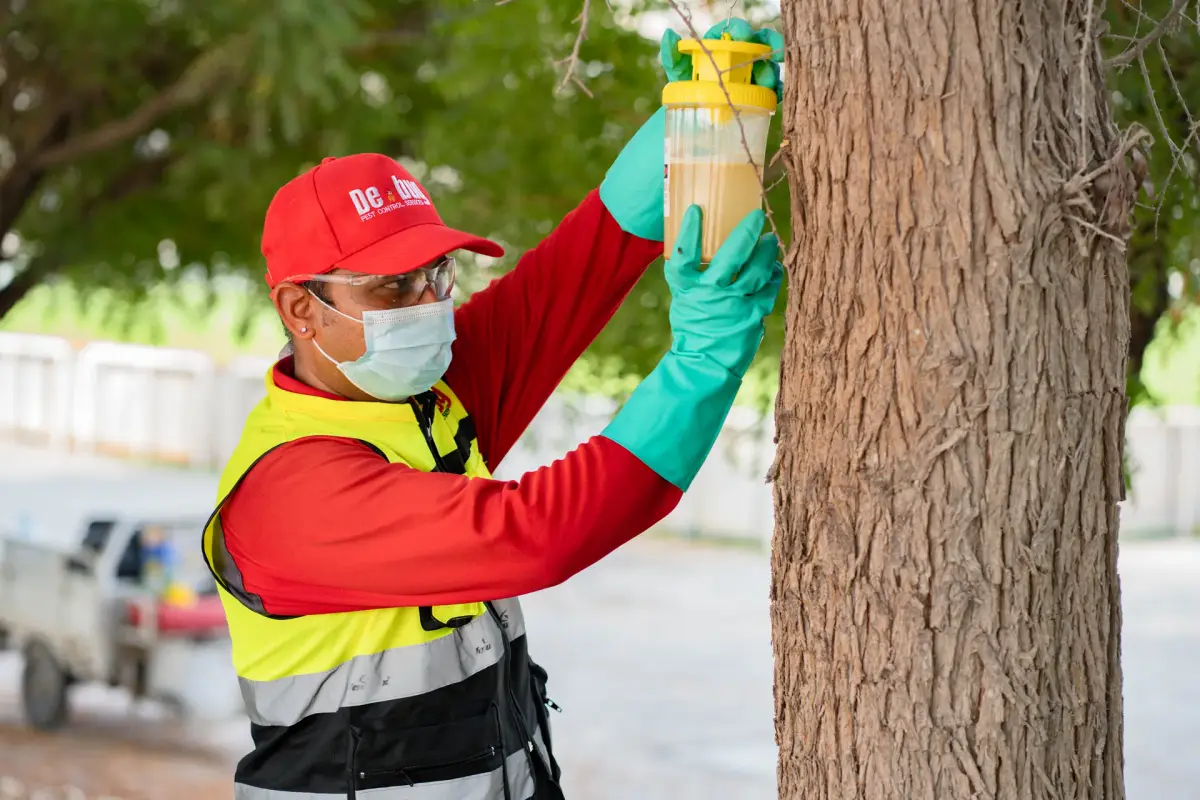
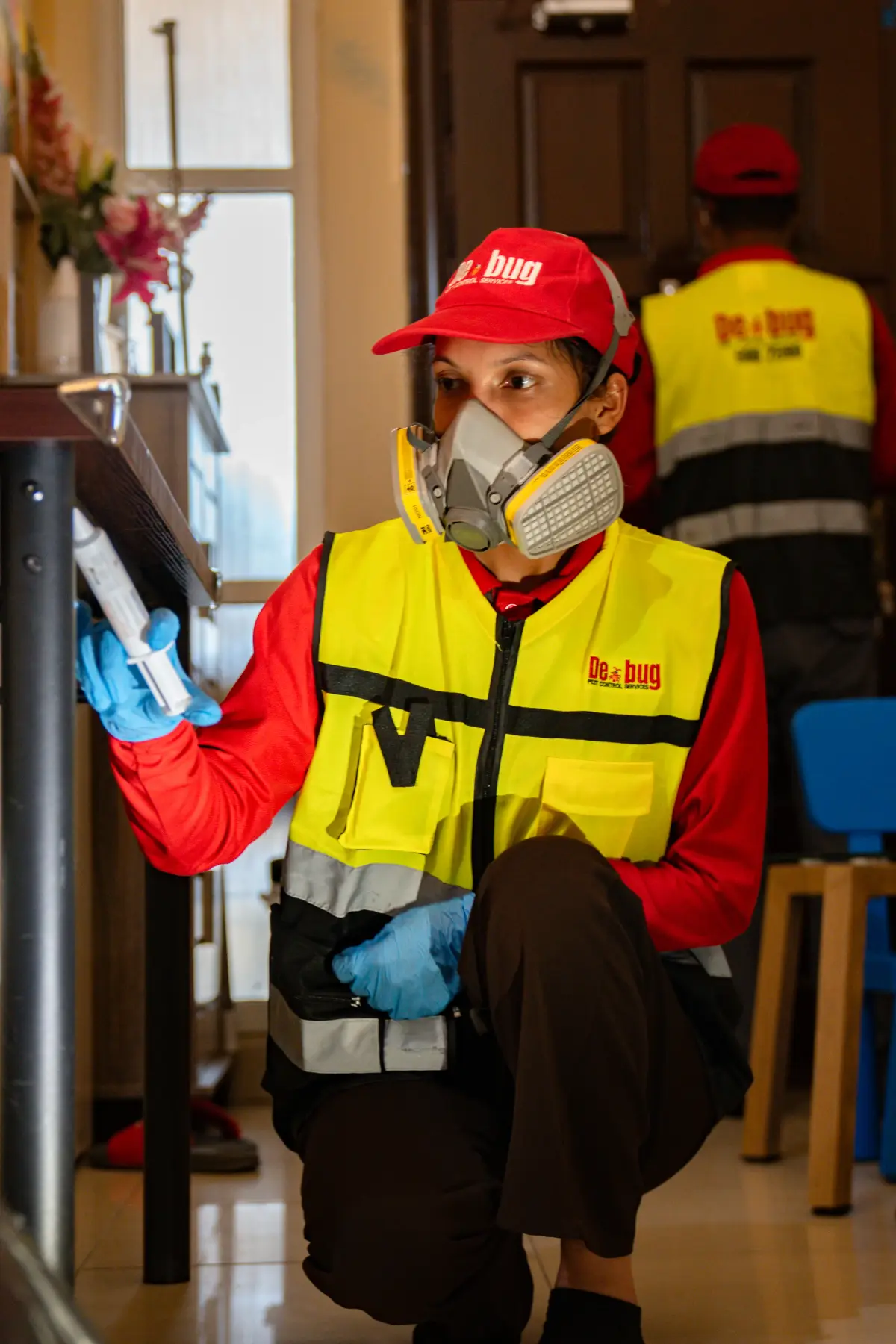
Professional fumigation service in UAE by Debug
Critical for export compliance
Don't wait for a failed inspection

Most fumigation enquiries arrive after a compliance failure or cargo rejection. A proactive site survey identifies fumigation needs before they become costly delays.

Book a Free Site Survey →

Why fumigation can't wait.

Delaying fumigation when conditions require it exposes your business to escalating financial, regulatory, and operational consequences. Every week of delay compounds the cost of resolution.

Stock & Commodity Damage

Stored-product insects destroy grain, flour, rice, spices, and dried goods from the inside out. Infested stock must be condemned in its entirety — partial salvage is not permitted under UAE food safety regulations. Losses escalate exponentially as populations double every 4–6 weeks in warm warehouse conditions.

Export Rejection & Port Delays

Cargo arriving at the destination port without valid ISPM-15 fumigation certificates is quarantined, rejected, or destroyed at the shipper's expense. Re-fumigation at the destination port costs significantly more than pre-shipment fumigation — and the delay damages client relationships and contractual timelines.

Health & Safety Hazards

Stored-product insect frass, cast skins, and dead bodies contaminate food commodities with allergens and pathogens. Workers in heavily infested warehouses are exposed to respiratory irritants. Prolonged infestations in food-processing environments create conditions that fail occupational health assessments.

Structural Timber Damage

Drywood termites and wood-boring beetles weaken roof trusses, joinery, door frames, and structural timber over months and years. Unlike subterranean termites, these species live entirely within the wood — invisible until serious structural damage has occurred. Fumigation is the only treatment that reaches every colony within the structure.

Regulatory Penalties & Fines

ADAFSA, Dubai Municipality, and port authorities impose fines for pest evidence in food storage, processing, and export facilities. Repeat violations escalate from written warnings to fines starting at AED 5,000, facility closure orders, and licence suspension. A documented fumigation programme demonstrates compliance and avoids escalation.

Business & Operational Disruption

An unplanned fumigation triggered by a compliance failure or cargo rejection causes far more disruption than a scheduled treatment. Emergency fumigation requires the same preparation and vacating time — but without the benefit of planned stock movement, production scheduling, and stakeholder coordination.

Four fumigation methods compared.

Debug selects the appropriate fumigant and method based on the target pest, commodity type, facility structure, and regulatory requirements. Every fumigation in Abu Dhabi, Dubai, Sharjah, and Fujairah is carried out by licensed fumigators using calibrated monitoring equipment.

Methyl Bromide

ISPM-15 export cargo, wooden packaging, pallets, dunnage, quarantine treatments

24–72 hours depending on commodity volume, temperature, and target pest ISPM-15 fumigation certificate, gas-free certificate, treatment log
How It Works

Colourless gas penetrates all materials within the sealed enclosure. Lethal to all insect life stages, nematodes, and pathogens. Applied under gas-tight tarpaulins or in sealed chambers

Phosphine (Aluminium Phosphide)

Grain silos, bulk commodities, shipping containers, warehouses, stored food products

3–7 days depending on commodity density, temperature, and silo volume Fumigation certificate, gas-free certificate, commodity release documentation
How It Works

Aluminium phosphide tablets release phosphine gas on contact with moisture. Penetrates deep into bulk commodities. Effective against all stored-product insects at all life stages

Sulfuryl Fluoride

Structural fumigation, drywood termites, wood-boring beetles, museum collections, heritage buildings

24–48 hours plus aeration period of 6–12 hours Structural fumigation certificate, gas-free certificate, re-entry clearance
How It Works

Odourless gas penetrates wood, wall cavities, and structural voids. Does not affect metals, electronics, or fabrics. Ideal for occupied buildings requiring whole-structure treatment

Heat Fumigation

Chemical-sensitive environments, organic goods, food-processing areas, bakeries, mills

12–36 hours depending on structure size and insulation Heat treatment certificate, temperature log, commodity release documentation
How It Works

Sustained temperatures of 56–60 °C throughout the treatment zone using industrial heaters and air-circulation fans. No chemical residue. Suitable for organic certification environments

Methyl bromide use is regulated under the Montreal Protocol. Debug holds all required licences for methyl bromide fumigation in the UAE and complies with ADAFSA and municipality regulations on controlled substances. For chemical-free alternatives, see our heat treatment service.

Not sure which fumigation method your facility needs?

Request a Free Quote

Our four-step fumigation process.

Every Debug fumigation follows a strict four-stage protocol designed for maximum efficacy, regulatory compliance, and safety. From initial site survey through to gas-free certification, each step is documented and auditable.

01

Site survey & risk assessment

A licensed fumigator inspects the facility, identifies the target pest species, assesses the commodity type and volume, evaluates structural sealability, and determines the appropriate fumigant and dosage. The survey includes a safety assessment covering neighbouring properties, ventilation routes, and evacuation requirements. A detailed fumigation plan and quotation are delivered within 48 hours.

Free of charge
02

Sealing & preparation

The treatment zone is sealed using gas-tight tarpaulins, adhesive tape, sand snakes, or existing structural seals. All personnel, animals, and sensitive items are removed. Warning signage and safety cordons are placed at all entry points. Gas monitoring equipment is positioned at boundary points to ensure zero leakage during treatment.

Safety-first protocol
03

Gas treatment & monitoring

The selected fumigant is introduced at the calculated dosage. Gas concentration is monitored continuously using calibrated detection equipment to ensure lethal concentrations are maintained throughout the exposure period. Temperature and humidity readings are logged at regular intervals. Debug technicians remain on-site or on-call for the full treatment duration.

Continuous monitoring
04

Aeration & certification

Following the prescribed exposure period, the treatment zone is ventilated using forced-air extraction and natural aeration. Gas concentration is measured at multiple points until levels fall below the safe re-entry threshold. A gas-free certificate is issued, along with the fumigation certificate, treatment log, and commodity release documentation where applicable.

Gas-free certified

Six ways to prevent pest buildup between fumigation cycles.

Fumigation eliminates existing infestations, but reinfestation occurs when conditions allow. These six practices reduce pest pressure between fumigation cycles and extend the interval between treatments.

01

FIFO stock rotation

First-in, first-out rotation prevents commodities from sitting long enough for stored-product insects to complete their life cycle. In UAE warehouse temperatures, grain beetle generations can complete in as little as 4 weeks — strict FIFO limits exposure time.

02

Incoming goods inspection

Inspect every incoming shipment for live insects, webbing, frass, and damaged packaging before accepting into storage. Reject or quarantine infested consignments immediately — a single contaminated pallet can reinfest an entire warehouse within weeks.

03

Structural proofing & sealing

Seal gaps around loading dock doors, ventilation louvres, cable penetrations, and roof-wall junctions. Install mesh screens on windows and vents. A well-sealed structure is easier to fumigate and slower to reinfest — reducing long-term fumigation frequency and cost.

04

Pheromone trap programme

Deploy species-specific pheromone traps throughout the storage facility and check weekly. Trap catch data provides early warning of new infestations, identifies the source, and measures the effectiveness of hygiene measures — enabling targeted intervention before fumigation becomes necessary.

05

Facility sanitation & spillage control

Remove commodity spillage, dust, and residues from floors, conveyor systems, and storage bays daily. Stored-product insects thrive in accumulated debris — even small pockets of spilled grain or flour provide sufficient food for colony establishment between fumigation cycles.

06

Temperature & humidity management

Stored-product insects reproduce fastest between 25–35 °C at 60–80% relative humidity — typical UAE warehouse conditions. Reducing temperature below 20 °C and humidity below 50% slows insect development significantly. Climate-controlled storage extends commodity shelf life and reduces fumigation frequency.

Fumigation cost in the UAE.

Fumigation pricing depends on the facility, fumigant, commodity, and regulatory requirements. Debug provides transparent quotations after a free site survey — no hidden fees, no obligation. Below are the four factors that determine fumigation cost in Abu Dhabi, Dubai, Sharjah, and Fujairah.

Treatment Area

Larger structures, multi-bay warehouses, and bulk silos require more fumigant, additional sealing materials, and longer monitoring periods. Pricing scales with the total cubic volume of the treatment zone and the complexity of sealing required.

Fumigant Type

Methyl bromide, phosphine, sulfuryl fluoride, and heat fumigation each carry different material and operational costs. Methyl bromide treatments for ISPM-15 export compliance are priced differently from phosphine commodity fumigations due to regulatory licensing and controlled-substance handling requirements.

Cargo & Commodity Type

Dense commodities such as grain and rice require higher fumigant concentrations and longer exposure periods than loose goods or empty structures. Perishable and organic commodities may require heat fumigation at a different price point. The commodity type also determines which fumigant is permitted.

Regulatory Requirements

ISPM-15 export fumigations, ADAFSA-mandated commodity treatments, and port-authority quarantine fumigations each carry specific documentation, supervision, and certification requirements that affect pricing. Multi-certificate fumigations for international shipments involve additional compliance processing.

Fumigation from AED 1,500

Fumigation for a standard 20 ft shipping container starts from AED 1,500 for phosphine treatment. Structural fumigation, large-volume silo treatments, and methyl bromide ISPM-15 fumigations are quoted individually based on the site survey. Debug provides a written quotation within 48 hours of the free site inspection — including fumigant, duration, certification, and all-inclusive pricing with no hidden charges.

Credentials & Certifications
4.8 Rating on Google
Client Reviews

What our fumigation clients say.

Verified Google reviews from warehouse managers, logistics operators, export companies, and facility managers who use Debug fumigation services across Abu Dhabi, Dubai, Sharjah, and Fujairah.

★★★★★

I came across this company while searching for a good bug exterminator and I must say I was very impressed with their prices and the quality of their work. I had an infestation of bees and after researching a reputable company I found debug pest control. I called them first thing in the morning and they were there by noon. They gave me a free quote and spent over an hour on the house to remove the bees and secure the hive. I would definitely recommend these guys!

R
Raihan Khan Dubai · Google Review
★★★★★

Very professional and excellent service. Mr. Hassan and Mr. Hareesh did a good job. Highly recommended for their good work.

S
Shilpa Menon Abu Dhabi · Google Review
★★★★★

What to say and not to sound like payed internet bot? First of all I searched for 2 days who to contact and randomly I decided to contact them over their website, they responded from AD office, transfer the case to DXB and from that moment I booked them within 24h, super fast! They came at 8:30 and did a 3 different treatments for yellow ants that I inherited from previous tenant, closed the AC and left the apartment. What I experience now is how good are their insecticides, around the toilet and balcony I have a graveyard of ants, in tones, that I was not expecting to have at all so much, next I have also dead cockroaches on balcony, which I was thinking that I don't have... I will call them again definitely, because this is a right service provider from my perspective. I expect that ants needs a few treatments and at least I know who to call for help. I recommend them without any hesitations, the gentlemen that did the work in my house was Richard, nice, calm and very detailed in his work. Thanks De.Bug!

B
Bojan Vancetovic Dubai · Google Review
★★★★★

Excellent service, very courteous Staff, and very patient. At the time they arrived, I had other mechanical complications with my unit, and they waited patiently until everything was done before they completed their tasks. I would highly recommend.

F
Farhad Tabarrok Abu Dhabi · Google Review
★★★★★

We had some cockroach and bed bug disturbances inside our flat located near Belhoul Hospital, Al Baraha. The technical team came to be experts in providing an excellent prevention service. Thank you, Debug, for your sincere efforts. Highly recommended.

C
Chris Methan Dubai · Google Review
★★★★★

Debug is a company I highly recommend. They sent over Mr. Harsh who was very professional and did a very detailed job.

M
Marc Chabria Abu Dhabi · Google Review

Fumigation FAQ.

Common questions about fumigation safety, duration, cost, commodities, ISPM-15 compliance, and re-entry procedures for properties and facilities in the UAE.

Fumigation gases are toxic during the treatment period — that is how they eliminate pests. All people, pets, and plants must vacate the treatment zone before fumigation begins. Debug establishes a safety cordon, posts warning signage at all entry points, and monitors boundary gas levels throughout the treatment. After the prescribed exposure period, forced-air aeration reduces gas concentrations to below the safe re-entry threshold. A gas-free certificate is issued only after monitoring confirms the space is safe for re-occupation. When carried out by licensed professionals following correct protocols, fumigation is entirely safe.
Treatment duration depends on the fumigant, commodity type, volume, and temperature. Methyl bromide fumigation typically requires 24–72 hours of exposure. Phosphine fumigation of bulk commodities requires 3–7 days due to the slower gas release from aluminium phosphide tablets. Sulfuryl fluoride structural fumigation takes 24–48 hours plus 6–12 hours of aeration. Heat fumigation requires 12–36 hours. Debug provides a precise timeline during the site survey so you can plan stock movement, production schedules, and facility access accordingly.
Fumigation for a standard 20 ft shipping container starts from AED 1,500 for phosphine treatment. Structural fumigation and large-volume treatments are quoted individually based on the site survey. Pricing depends on treatment area, fumigant type, commodity, and regulatory requirements. Debug provides a detailed written quotation within 48 hours of the free site inspection with no hidden charges. Call 800 7890 for a free fumigation survey and quote.
Fumigation is used for a wide range of commodities including grain, rice, flour, dried fruits, nuts, spices, tobacco, coffee, cocoa, animal feed, timber, wooden packaging, and pallets. The choice of fumigant depends on the commodity — phosphine is the most common for bulk food commodities, while methyl bromide is used for ISPM-15 phytosanitary treatments of wooden packaging. Certain commodities such as fresh fruit and vegetables cannot be fumigated with phosphine. Debug advises on the correct fumigant for each commodity during the site survey.
ISPM-15 (International Standards for Phytosanitary Measures No. 15) is a global standard requiring wooden packaging materials used in international trade to be treated against wood-boring pests. Accepted treatments are methyl bromide fumigation or heat treatment to a core temperature of 56 °C for 30 minutes. Cargo shipped with non-compliant wooden packaging — pallets, crates, dunnage — is rejected or quarantined at the destination port. Debug is an authorised ISPM-15 treatment provider and issues internationally recognised fumigation certificates.
Re-entry is permitted only after the gas-free certificate has been issued. Debug monitors gas concentrations at multiple points within the treated space using calibrated gas detection equipment. For methyl bromide, the safe re-entry level is below 5 ppm. For phosphine, re-entry is permitted below 0.3 ppm. For sulfuryl fluoride, the threshold is 1 ppm. Aeration typically takes 6–24 hours depending on the structure, ventilation, and ambient temperature. Debug does not issue the gas-free certificate until readings are confirmed safe at all monitoring points.
Phosphine gas dissipates completely during aeration, leaving no residue on treated commodities — making it the preferred fumigant for food products. Methyl bromide can leave inorganic bromide residues in some commodities; maximum residue limits (MRLs) are set by importing countries and the Codex Alimentarius. Sulfuryl fluoride leaves minimal residue and is approved for use in food-processing facilities. Heat fumigation is entirely residue-free. Debug selects the appropriate fumigant for each commodity and ensures all treatments comply with destination-country residue requirements.
Yes. Debug provides on-site fumigation at all major UAE ports including Abu Dhabi Port, Jebel Ali Port, Sharjah Container Terminal, and Fujairah Port. Container fumigation is carried out under tarpaulin or in designated fumigation zones using methyl bromide or phosphine as required by the destination country. Debug coordinates with port authorities, freight forwarders, and customs agents to ensure fumigation certificates are issued in time for vessel loading schedules.
Chat with us
Call WhatsApp