




Skip to content
20% OFF Save on Your First Service — Enjoy special savings on premium pest control across the UAE. Claim Offer

Marine & Vessel Pest Control Services

Debug provides professional marine and vessel pest control services across UAE ports including Abu Dhabi, Dubai and the Northern Emirates (Sharjah, Ajman, Umm Al Quwain, Ras Al Khaimah and Fujairah). Our specialist marine pest management programs are designed for bulk carriers, cargo vessels, tankers, barges, container vessels, offshore support vessels and maritime logistics operators. Services include vessel fumigation, cargo hold pest management, stored-product insect control, rodent management, cargo protection programmes, quarantine compliance support, port health requirements, monitoring systems, and Integrated Pest Management (IPM) solutions designed to meet international maritime standards and UAE port regulations.

Certified Professionals
Same-Day Response
ISO 9001 Certified
UAE-Wide Coverage
20% OFF — Save on Your First Service. Enjoy special savings on premium pest control services across the UAE.

When Does a Vessel Require Professional Fumigation?

Vessel operators, port authorities, cargo surveyors and quarantine inspectors frequently identify pest risks that require professional treatment, often in the form of marine fumigation, to maintain cargo quality, and to meet international regulations and avoid costly shipping delays.

01

Rodent Activity Onboard

Active infestation is often indicated by presence of live rodents, droppings, gnaw marks, nesting materials, or damaged wiring in cargo holds, accommodation areas, engine rooms and food storage facilities. Rodents are a serious health risk and may lead to compulsory corrective action by port authorities.

Most common trigger
Rat spotted aboard a cargo vessel at a UAE port
Critical for port clearance
IMO-compliant vessel fumigation

Marine pest infestations compromise cargo quality, crew health, and port-authority compliance. Professional vessel fumigation using approved fumigants — with certified gas-free documentation — is the only way to satisfy IMO and UAE port-authority requirements.

Book a Free Survey →

Operational Risks of Postponing Vessel Fumigation

Marine pest infestations can have serious operational, financial and regulatory consequences if not addressed promptly.

Demurrage/Detention Charges at Port

Vessels that do not pass pest inspections may be held by port authorities resulting in berth delays, demurrage charges and schedule disruption.

Cargo Rejection

Destination country authorities may quarantine, downgrade or reject infested cargo.

Crew Health Risks

Rodents and insects can introduce pathogens, allergens and unsanitary living conditions that impact crew wellbeing.

Violation of Regulations

Failure to comply with phytosanitary, quarantine, and maritime health requirements could result in fines and additional inspections.

Insurance and Liability Exposure

Protection and indemnity clubs and cargo insurers may deny claims related to pest damage if the vessel operator failed to carry out required fumigation. Inadequate fumigation records, expired certificates, or non-compliant fumigation procedures weaken the operator's position in cargo-damage disputes.

Cargo Cross-Contamination

Infestations can spread from hold to hold, affecting the entire vessel and causing greater financial losses.

Marine Fumigation Methods Used by Debug

Each vessel has its own operational requirements depending on the type of cargo, length of the journey, requirements of the country of destination and the design of the vessel.

Phosphine Fumigation

Widely used for grain, cereals, rice, flour, pulses and bulk agricultural commodities.

3–5 days Fumigation certificate + gas-free certificate
How It Works

Aluminium phosphide or magnesium phosphide tablets placed in cargo holds react with atmospheric moisture to release phosphine gas. The holds are sealed for a specified exposure period to achieve lethal concentrations against all life stages of stored-product insects. Gas-concentration monitoring throughout

Methyl Bromide Fumigation

It is widely used for timber, pallets, dunnage, wooden packaging and cargo under quarantine regulations.

24–48 hours ISPM-15 certificate + gas-free certificate
How It Works

Methyl bromide gas introduced into sealed cargo holds or containers under pressure. Provides rapid penetration into timber and packaging materials. Used when ISPM-15 compliance is mandatory and phosphine exposure times are impractical. Applied under strict Montreal Protocol controls

Transit Fumigation

Allows exposure periods for fumigation during voyage, reducing port delays

Voyage duration Fumigation certificate issued at load port
How It Works

Fumigation commenced at the load port and continued during the voyage. Phosphine tablets are distributed in cargo holds before departure, and the holds remain sealed throughout the transit period. Gas-concentration readings are taken by trained crew or fumigation technicians aboard. Maximises exposure time without delaying the vessel

Degassing & Aeration

Controlled ventilation procedures ensure safe gas removal and support certification for gas-free status before cargo operations resume. The treatment is chosen after inspection of the vessel, assessment of the cargo, review of regulations and operational planning.

6–24 hours Gas-free certificate for port authority
How It Works

Controlled ventilation of fumigated holds using forced-air fans and natural ventilation to reduce residual gas concentrations to safe levels. Gas-concentration monitoring at multiple points within the hold using calibrated detection equipment. Aeration continues until readings fall below the threshold limit value (TLV)

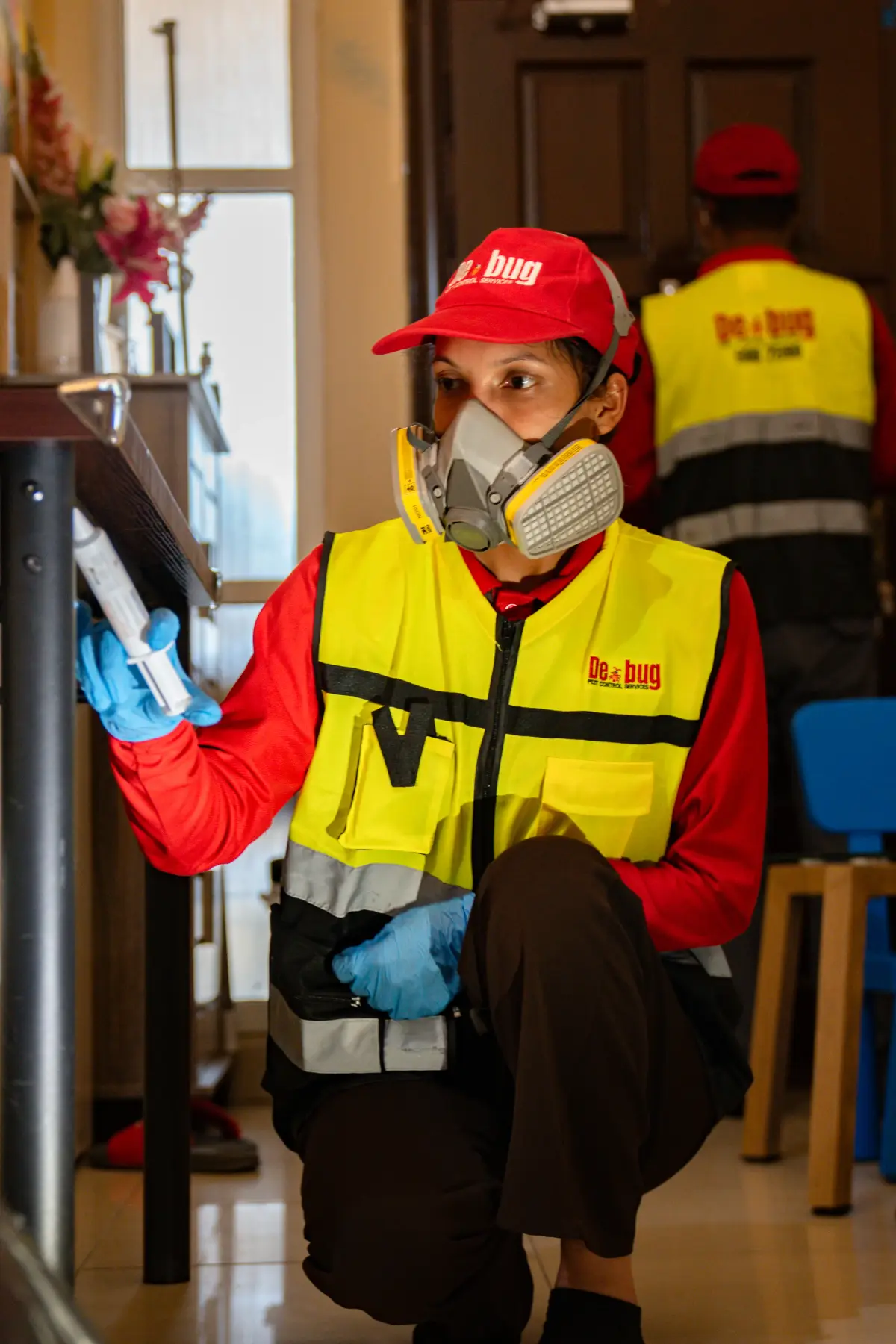
Debug carries out all vessel fumigation in strict accordance with IMO recommendations on the safe use of pesticides in ships (MSC.1/Circ.1264) and the FAO/WHO fumigation guidelines. Phosphine and methyl bromide applications are performed only by licensed, trained marine fumigators wearing full respiratory protection. For general fumigation services including warehouses, silos, and containers, see our dedicated fumigation page.

Need vessel fumigation at a UAE port? Request a free survey.

Request a Free Quote

Our Marine Fumigation Process

The process of vessel fumigation is complex and needs planning, monitoring and compliance management.

01

Vessel Survey & Risk Assessment

Comprehensive on-board survey of the vessel — cargo holds, hatches, ventilation systems, accommodation areas, and potential gas-leakage points. The survey determines the fumigant, dosage rate, exposure period, and sealing requirements. Vessel documentation (cargo manifest, previous fumigation records, port-authority directives) is reviewed and the fumigation plan is agreed with the master and ship operator.

~ 2–4 hours
02

Preparation – Safety & Sealing

All cargo-hold hatches, ventilation openings, access doors, and potential leakage points are sealed using gas-tight polyethylene sheeting and adhesive tape. Warning signs and gas-danger placards are posted at all access points in accordance with IMO requirements. Crew exclusion zones are established, and the master is briefed on safety procedures, emergency protocols, and the fumigation timeline.

Safety critical
03

Use of Fumigation

Licensed fumigators introduce the selected fumigant (phosphine tablets or methyl bromide gas) into sealed cargo holds at the calculated dosage rate. Gas-concentration readings are taken at multiple monitoring points within each hold to confirm target concentrations have been achieved. The holds remain sealed for the prescribed exposure period — monitored continuously by the fumigation team.

Licensed fumigators
04

Aeration & Certification

Following the required exposure period, controlled aeration is carried out using forced-air ventilation fans and natural airflow to reduce residual gas concentrations below the threshold limit value (TLV). Calibrated gas-detection equipment is used to take readings at multiple points in each hold. Once all readings are confirmed safe, a gas-free certificate is issued to the vessel master and port authority — clearing the vessel for crew re-entry, cargo discharge, and departure.

Gas-free certificate

Long Term Pest Control for Vessels

Good marine pest management is about stopping infestations before they happen. These six practices — recommended by IMO and adopted by Debug's marine clients — help maintain pest-free vessels between fumigation cycles.

01

Inspect cargo before loading

Examine all cargo, particularly grain, rice, timber, and packaged foodstuffs, for signs of insect activity, webbing, frass, and rodent droppings before loading. Reject visibly infested consignments to prevent introducing pests into clean cargo holds.

02

Seal hold and hull entry points

Maintain cargo-hold hatches, ventilation flaps, cable glands, and hull penetrations in good condition. Damaged seals allow insects and rodents to migrate between holds, accommodation areas, and engine rooms. Replace worn gaskets and repair damaged coamings promptly.

03

Clean holds between voyages

Thoroughly sweep, wash, and dry cargo holds between voyages — particularly after carrying grain, animal feed, or other organic commodities. Residual grain and cargo dust left in hold frames, bilge wells, and limber boards harbour insects and attract rodents.

04

Rodent Control Program

Fit cone-shaped rat guards to all mooring lines and gangway ropes whenever the vessel is alongside. Rats board vessels via mooring lines, shore-side gangways, and cargo-handling equipment. Rat guards are a simple, effective first line of defence required by most port-health authorities.

05

Surveillance Systems

Place insect pheromone traps and rodent monitoring stations in cargo holds, store rooms, the galley, and accommodation areas. Regular trap inspection provides early warning of pest activity — allowing intervention before populations establish and before port inspections detect problems.

06

Document Management

Keep a complete log of all fumigation certificates, gas-free certificates, pest-monitoring reports, and port-health inspection records. Up-to-date documentation expedites port clearance and demonstrates compliance during flag-state and port-state inspections. Debug provides digital fumigation records for all vessels treated under Annual Maintenance Contracts.

Vessel fumigation cost in the UAE.

Vessel fumigation cost depends on the vessel size, cargo type, fumigant selected, and port-authority requirements. Debug provides transparent quotes after a free on-board survey — no hidden fees, no obligation. Below are the factors that determine pricing for vessel fumigation at Dubai, Abu Dhabi, Sharjah, and Fujairah ports.

Vessel Size & Hold Volume

Fumigant dosage is calculated per cubic metre of cargo-hold volume. Larger vessels — Handymax, Panamax, and Capesize bulk carriers — require proportionally more fumigant, longer exposure periods, and larger fumigation teams. Small barges and coastal vessels cost less than deep-sea bulk carriers.

Cargo Type & Commodity

Grain, rice, and other bulk agricultural commodities require higher dosage rates and longer exposure periods than general cargo or empty holds. Timber and wooden packaging requiring ISPM-15 methyl-bromide treatment are priced differently from standard phosphine fumigation due to the higher cost of methyl bromide.

Fumigant Selected

Phosphine gas (aluminium phosphide) is the most cost-effective fumigant for bulk-commodity vessels. Methyl bromide is more expensive due to regulatory controls under the Montreal Protocol but is required for certain quarantine treatments and ISPM-15 timber compliance. The choice of fumigant directly affects the total project cost.

Port & Regulatory Requirements

Different UAE ports and destination-country quarantine authorities may specify minimum exposure periods, dosage rates, and documentation requirements. Fumigation at anchorage versus alongside incurs different logistics costs. In-transit fumigation requires additional crew-briefing and monitoring arrangements.

Vessel Fumigation — Starting from AED 3,000

Vessel fumigation at UAE ports starts from AED 3,000 for small coastal vessels and barges, with pricing scaled to vessel size, cargo type, and fumigant requirements. Debug provides a free on-board survey, transparent quote, and detailed fumigation plan before any work commences. All treatments include gas-free certification, port-authority documentation, and a compliance guarantee.

Credentials & Certifications
4.8 Rating on Google
Vessel Fumigation Reviews

What our clients say.

Verified reviews from ship operators, port agents, and cargo surveyors who used Debug vessel fumigation services at Jebel Ali, Khalifa Port, Port Rashid, and Sharjah ports.

★★★★★

I came across this company while searching for a good bug exterminator and I must say I was very impressed with their prices and the quality of their work. I had an infestation of bees and after researching a reputable company I found debug pest control. I called them first thing in the morning and they were there by noon. They gave me a free quote and spent over an hour on the house to remove the bees and secure the hive. I would definitely recommend these guys!

R
Raihan Khan Dubai · Google Review
★★★★★

Very professional and excellent service. Mr. Hassan and Mr. Hareesh did a good job. Highly recommended for their good work.

S
Shilpa Menon Abu Dhabi · Google Review
★★★★★

What to say and not to sound like payed internet bot? First of all I searched for 2 days who to contact and randomly I decided to contact them over their website, they responded from AD office, transfer the case to DXB and from that moment I booked them within 24h, super fast! They came at 8:30 and did a 3 different treatments for yellow ants that I inherited from previous tenant, closed the AC and left the apartment. What I experience now is how good are their insecticides, around the toilet and balcony I have a graveyard of ants, in tones, that I was not expecting to have at all so much, next I have also dead cockroaches on balcony, which I was thinking that I don't have... I will call them again definitely, because this is a right service provider from my perspective. I expect that ants needs a few treatments and at least I know who to call for help. I recommend them without any hesitations, the gentlemen that did the work in my house was Richard, nice, calm and very detailed in his work. Thanks De.Bug!

B
Bojan Vancetovic Dubai · Google Review
★★★★★

Excellent service, very courteous Staff, and very patient. At the time they arrived, I had other mechanical complications with my unit, and they waited patiently until everything was done before they completed their tasks. I would highly recommend.

F
Farhad Tabarrok Abu Dhabi · Google Review
★★★★★

We had some cockroach and bed bug disturbances inside our flat located near Belhoul Hospital, Al Baraha. The technical team came to be experts in providing an excellent prevention service. Thank you, Debug, for your sincere efforts. Highly recommended.

C
Chris Methan Dubai · Google Review
★★★★★

Debug is a company I highly recommend. They sent over Mr. Harsh who was very professional and did a very detailed job.

M
Marc Chabria Abu Dhabi · Google Review

Vessel fumigation FAQ.

Common questions about vessel and ship fumigation, IMO compliance, crew safety, and gas-free certification at UAE ports.

Some cargoes and destinations and quarantine regulations may require fumigation before vessel clearance or cargo discharge.

Treatment time varies with size of vessel, type of cargo, fumigant used, and regulatory requirements. Exposure times may be 24 hours to several days.

Crew safety is the highest priority during vessel fumigation. All fumigated cargo holds are sealed and clearly marked with gas-danger placards. Crew exclusion zones are established in accordance with IMO recommendations. The vessel master is briefed on emergency procedures, and gas-detection equipment is provided for monitoring accommodation-area air quality. Crew remain in designated safe areas (accommodation block, bridge) throughout the fumigation period. No crew member enters fumigated spaces until the gas-free certificate is issued.
In-transit fumigation is a method where the fumigant (usually phosphine tablets) is applied to cargo holds at the load port, and the holds remain sealed during the voyage. The transit period provides the required exposure time without delaying the vessel at port. Gas-concentration readings are taken by trained crew or fumigation technicians aboard. Aeration and gas-free certification are completed at the discharge port before cargo operations commence. This method is widely used for grain vessels trading from the Arabian Gulf to destination ports.

A gas-free certificate means that the concentration of residual fumigants has been reduced to a level which is safe for the crew to re-enter and for operational activity.

Debug fumigates all commercial vessel types at UAE ports — bulk carriers (Handysize, Handymax, Panamax, Capesize), general cargo vessels, container ships (hold fumigation), tankers (accommodation and store-room fumigation), barges, offshore supply vessels, and naval vessels. We also fumigate cargo containers on board or at container yards. Each vessel type requires specific sealing, dosage, and safety protocols tailored to its configuration.
Debug uses both phosphine gas (from aluminium phosphide or magnesium phosphide) and methyl bromide, depending on the cargo, regulatory requirements, and client specifications. Phosphine is the most widely used fumigant for bulk grain and stored-product insect control. Methyl bromide is used when ISPM-15 quarantine treatment of timber or wooden packaging is required, or when rapid fumigation turnaround is needed. Debug advises on the most effective and cost-efficient fumigant for each vessel and cargo type.
Yes. Debug provides all required documentation for UAE and international port authorities — fumigation certificates, gas-free certificates, fumigant safety data sheets, and treatment records. All certificates are issued in accordance with IMO, FAO, and ISPM-15 requirements and are accepted by quarantine authorities worldwide. Digital copies are provided to the vessel master, ship operator, and port agent.

Timber, pallets, grain, rice, wheat, flour, pulses and other export commodities often need to be fumigated.

Yes. Debug furnishes fumigation certificates, gas-free certificates, treatment records and compliance documentation required by port authorities and regulators in destination countries.

Chat with us
Call WhatsApp