

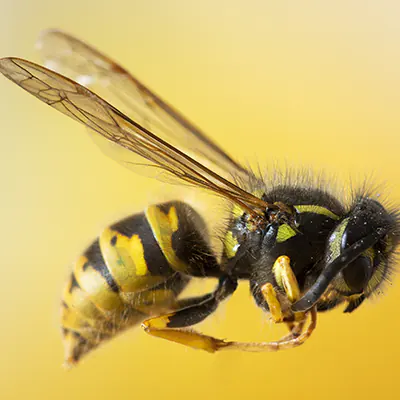
Beehive Removal
Professional beehive and swarm removal across the UAE. Certified handlers safely relocate bee colonies using humane capture methods, with hive sealing and exclusion work to prevent re-colonisation.
Read MoreDebug provides professional stray animal control across Abu Dhabi, Dubai, and the Northern Emirates (Sharjah, Ajman, Umm Al Quwain, Ras Al Khaimah, and Fujairah), handling stray cats, stray dogs, foxes, and jackals. The work combines humane live-capture methods with coordination with municipality authorities and animal welfare organizations, plus the exclusion measures that stop the animals coming back. Every method is municipality-approved and humane, backed by a follow-up guarantee, so residents and businesses are protected and the animals are dealt with responsibly rather than cruelly.
Six Signs of Stray Animal Activity Around Your Property
Stray cats, dogs, foxes, and jackals become regular visitors to any property that offers food, water, shelter, or easy access to waste. Once they settle into the habit, they bring property damage, noise complaints, and real health risks with them. These are the signs our technicians see most often on UAE properties.
Faeces and urine on driveways, walkways, garden beds, and entrances is the most visible sign of regular stray visits. Cat urine in particular leaves a strong, persistent ammonia odour that is hard to shift, and dog faeces on shared walkways is a genuine hygiene concern for residents rather than just an eyesore.
Most common signDifferent animals dig for different reasons, and all of it does damage. Stray cats dig in soft garden beds and sand to bury waste; stray dogs and foxes dig under fences, around foundations, and in borders, either hunting for food or making a den. Repeated digging wrecks landscaping and irrigation systems and, where it undermines a boundary wall, becomes a structural problem rather than a cosmetic one.
Nocturnal barking, howling, and fighting between stray dogs or cats is one of the most disruptive signs, especially in villa communities and residential compounds where it carries between homes. It escalates sharply during mating seasons, and on desert-edge properties the calls of foxes and jackals are a common addition through the cooler months.
Quality of life impactThe damage tends to match the animal. Cats scratch garden furniture, vehicle paintwork, and outdoor fabrics; dogs chew outdoor cushions, shoes, irrigation pipes, and hoses; foxes and jackals tear into bin enclosures and garden structures. None of it is one-off, which is the issue, because repeated damage turns into a standing maintenance cost for owners and facility managers.
Overturned bins, torn refuse bags, and food waste scattered across car parks, walkways, and communal areas point to regular scavenging by stray dogs, cats, or foxes. It is also self-reinforcing: open or poorly secured waste does not just signal a stray problem, it actively attracts and sustains one, feeding the population that then keeps returning.
When animals start sheltering on the property, it has stopped being somewhere they pass through and become somewhere they live. Cats nest under vehicles, inside service rooms, and in plant rooms; dogs shelter under parked cars, in stairwells, and beneath porches; foxes den in garden borders and under sheds. Animals bedding down on site is the clearest sign the property has become a habitat, and that is the point at which it needs managing.

Why Professional Stray Animal Management Matters
Stray animals are easy to tolerate as a nuisance until you account for what they actually bring with them: genuine health risks, ongoing property damage, and real legal liability for building owners and facility managers. Those three things are why this is worth managing professionally rather than ignoring or trying to chase off informally.
The headline risk is rabies, a fatal disease that stray dogs and cats can carry and transmit through a bite or scratch. Beyond that, strays carry parasites, fleas, ticks, and mange mites, along with ringworm, toxoplasmosis from cats, and leptospirosis from dogs. Contact with stray faeces, urine, or saliva puts residents, children, and domestic pets at risk, which is precisely why removal is handled by people equipped for it rather than left to chance.
Stray dogs chew through irrigation, outdoor furniture, and garden features; cats scratch vehicles, furniture, and fabrics; foxes and jackals damage bin enclosures and fencing. Because it recurs rather than happening once, the result is a steady maintenance cost and a visible drop in the appeal of a residential community or commercial property, which is its own kind of loss.
Nocturnal barking, howling, and fighting causes real sleep disruption and stress for residents, and in villa communities and compounds it turns into a flow of complaints. That matters commercially as well as personally: persistent noise reduces a property's desirability and affects tenant retention, and it gets worse during mating seasons, exactly when it is hardest to ignore
Animal waste in communal areas, car parks, and walkways is both a hygiene problem and a slip hazard. The stakes rise sharply for food businesses: a stray cat colony near a food preparation area or waste store is a serious health and regulatory concern for a hotel or restaurant, and a municipality inspection can turn unmanaged animal-related hygiene issues into fines. For these properties, stray control is a compliance matter, not just a comfort one.
Professional Stray Animal Management Solutions
There is no single right approach, only the right one for the species, the population level, the property type, and the municipality requirements that apply. So our teams in Dubai, Abu Dhabi, Sharjah, and Fujairah assess every situation first, then recommend the most effective and humane plan, usually a combination of the following.
Individual stray cats, dogs, foxes, or jackals on the property
Professional live-capture traps are positioned at the points where the animals are active and checked at scheduled intervals by trained technicians, so nothing is left distressed in a trap. Captured animals are handled humanely and transported to municipality animal control or registered welfare organizations, with every capture documented for the property's management records.
Large stray populations, repeat visitors, and community-wide issues
Stray animal control is not work that should happen off the books, which is why we coordinate directly with municipality animal control departments and recognized welfare organizations throughout. That coordination is what makes the handling and relocation responsible and compliant rather than a grey-area removal, and it is also what protects the property owner.
Properties with identified entry points, fence gaps, and accessible shelter areas
Capture without exclusion simply leaves a vacancy for the next animal, so we secure the fence gaps, access points, and vulnerable areas that let them in. Sealing those routes is what turns a removal into a lasting result rather than the first of repeated callouts.
Properties where food waste and open bins attract stray animals
Almost every stray problem traces back to a food source, so removing it is half the solution. We provide waste-management recommendations to cut off what is sustaining the animals, because a property with secured bins and no accessible food simply stops being worth visiting, which is the most durable form of prevention there is.
Debug combines humane capture with exclusion barriers and waste management improvements for lasting stray animal control. For residential communities and villa compounds, we provide community-wide management plans that address the root causes of stray animal presence. Commercial properties including hotels, shopping centres, and industrial compounds receive custom management plans with ongoing monitoring and municipality coordination.
Not sure which stray animal management approach your property needs?
Request a Free QuoteOur Four-Step Stray Animal Control Process
Every stray animal management project follows Debug's four-stage protocol — designed to assess the situation, humanely capture and relocate animals, prevent re-entry, and provide ongoing monitoring. All methods are municipality-approved and humane.
An on-site evaluation of the species present, the estimated population, the feeding sources, the access points, the sheltering locations, and the property layout. This is what determines the capture strategy, the exclusion needed, and whether the population is large enough to require municipality coordination. It typically takes one to two hours.
Live-capture traps are set at the identified locations and checked on a schedule by trained technicians, with captured animals handled humanely and transported to municipality animal control or registered welfare organizations. Everything is documented and carried out in full compliance with municipality regulations, which is the part that distinguishes a professional removal from an informal one.
Physical barriers go in to block the entry points: fence gaps sealed, gates adjusted, bin enclosures secured, and under-building access closed off. We pair that with waste-management recommendations to eliminate the food source, and non-harmful deterrent devices at the key access points to discourage return visits.
Scheduled follow-up visits check that the exclusion barriers are holding, watch for returning animals, and adjust the plan as needed. For community-wide programmes, we provide regular reports to property management and community associations. If animals return within the guarantee period, the additional capture visits are provided at no extra cost.
Six Ways to Prevent Stray Animal Problems
Stray animals come for food, water, shelter, and accessible waste, so most of the problems we manage trace back to one of those conditions. These six measures cut the chance of stray cats, dogs, foxes, and jackals turning your property into a regular stop.
Use bins with heavy, tight-fitting lids or lockable enclosures, fit self-closing doors on communal waste rooms, and schedule collection to prevent overflow, since open or overflowing bins are the single biggest attractant for strays.
Pet food, water bowls, and scraps left out draw more animals, grow the population, and create dependency. Where community feeding happens, it should run through a managed TNR (trap-neuter-return) programme coordinated with welfare organizations rather than informally.
Inspect walls and fences for gaps, holes, and dig-under points, and seal them with mesh, concrete, or wire mesh buried along the base. Gate bottoms should close flush to the ground or carry brush strips to block entry.
Seal under-building voids, plant rooms, pump rooms, and storage areas, make sure service room doors close securely, and block the gaps beneath porches, decking, and sheds that make ideal den sites.
Motion-activated sprinklers and ultrasonic devices discourage animals from gardens, car parks, and communal areas, creating an uncomfortable experience without causing injury so they move on elsewhere.
Individual measures work best alongside a coordinated approach, which is why we work with community associations, property management companies, and facility managers to manage strays across whole compounds and developments. Part of Debug Annual Maintenance Contracts.
Stray Animal Control Cost in the UAE
What stray animal control costs comes down to the scope of the problem, the species involved, the size of the property, and how much exclusion work is needed. Debug provides a transparent quote after a free on-site assessment, with no hidden fees and no obligation. Below are the factors that determine pricing in Abu Dhabi, Dubai, Sharjah, and Fujairah.
Managing a single stray cat or dog costs less than dealing with a population of several animals or a mixed-species problem that includes foxes or jackals. Larger populations need more traps, longer capture programmes, and more coordination with the authorities, all of which adds to the scope.
Larger properties with longer boundaries, multiple entry points, and extensive garden or car park areas need more traps, more exclusion work, and more follow-up monitoring. Community-wide programmes for entire compounds are priced per property, with volume discounts that bring the per-unit cost down.
Properties needing fence repairs, gate adjustments, bin enclosure modifications, and under-building access-blocking carry additional exclusion costs. It is worth it, though, because comprehensive barriers provide lasting prevention and work out more cost-effective than repeated capture programmes that never address how the animals get in.
Properties with persistent stray problems benefit from scheduled monitoring visits, barrier integrity checks, and ongoing municipality coordination. A maintenance contract provides cost-effective long-term management compared with paying for repeated individual callouts each time the problem resurfaces.
Debug does not charge for stray animal assessments, site visits, or detailed quotes, anywhere across Abu Dhabi, Dubai, Sharjah, and the Northern Emirates. Every assessment covers the population evaluation, the access point identification, the exclusion recommendations, and transparent pricing, all provided on the same visit rather than weeks later. And every stray animal control service is carried out with humane, municipality-approved methods and backed by





Verified Google reviews from homeowners, property managers, and community associations who used Debug stray animal management services in Abu Dhabi, Dubai, Sharjah, and Fujairah.
Debug provides stray animal management services across Abu Dhabi, Dubai, Sharjah, and Fujairah — same humane methods, same municipality coordination, same follow-up guarantee in every location.
Common questions about stray animal management, humane capture, and prevention in UAE properties.
Yes. Debug offers scheduled monitoring contracts that include regular site visits, barrier integrity checks, trap maintenance, and ongoing municipality coordination. Monitoring contracts are ideal for properties and communities with persistent stray animal activity. Included with Debug Annual Maintenance Contracts.
Professional beehive and swarm removal across the UAE. Certified handlers safely relocate bee colonies using humane capture methods, with hive sealing and exclusion work to prevent re-colonisation.
Read More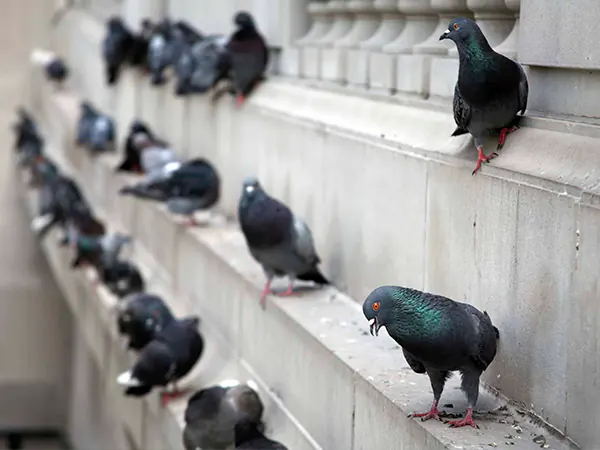
Bird control and deterrent installation for pigeons, mynahs, and seagulls. Netting, spike systems, optical gel, and exclusion solutions for commercial rooftops, warehouses, and residential balconies.
Read More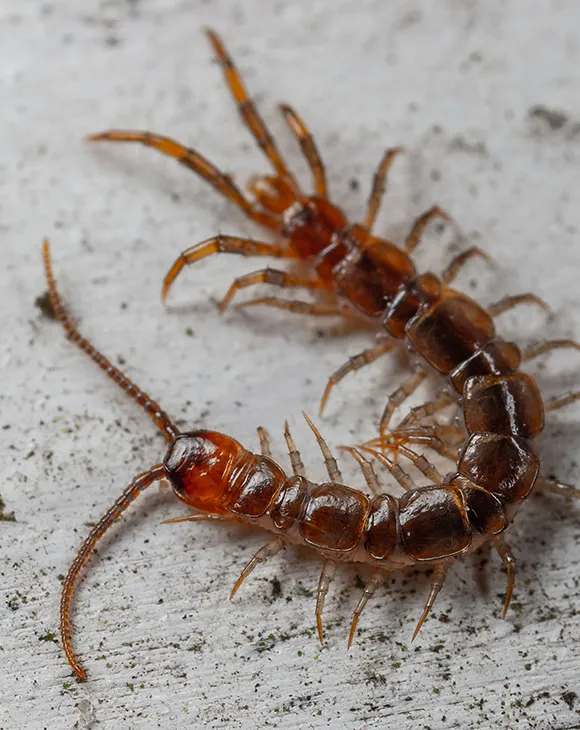
Centipede control through harbourage treatment, moisture reduction, perimeter barriers, and crack-and-crevice applications. Targeted solutions for UAE species found in villas, gardens, and basement areas.
Read More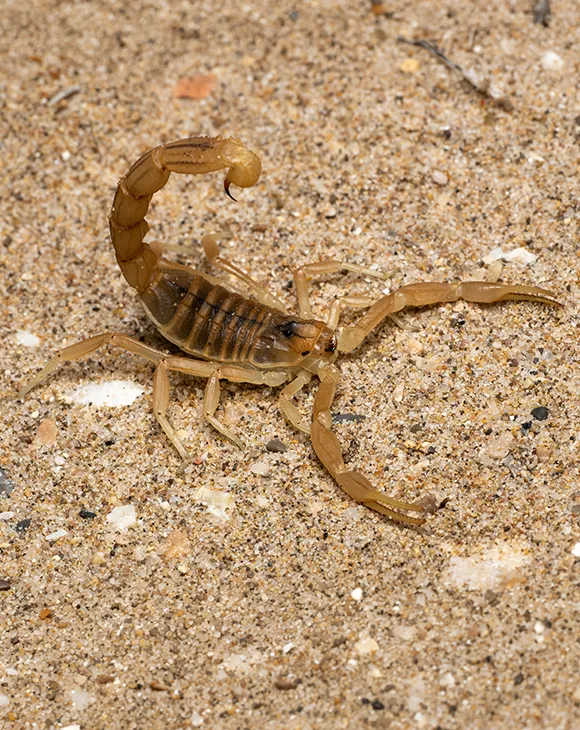
Scorpion control for residential and commercial properties using UV detection, perimeter dusting, harbourage elimination, and entry-point sealing. Species-specific protocols for the UAE's desert scorpion species.
Read More
Emergency snake removal by certified wildlife handlers. Safe capture, species identification, and relocation of venomous and non-venomous snakes, with property exclusion to prevent re-entry.
Read More