
Industrial & Factory Pest Control in Abu Dhabi
In a food plant or pharmaceutical warehouse, pest control is not a maintenance line item. It is a condition of staying open. A single rodent dropping on a production line can mean a rejected batch. One ADAFSA inspection finding can mean a closure order. The industrial facilities across KIZAD, ICAD, and Mussafah Industrial Area run 24-hour operations with raw material in bulk storage and goods moving in and out around the clock, and that combination keeps rodents, cockroaches, stored-product insects, and flying pests under constant pressure to get in. Standard commercial spraying does not hold up in that environment. Debug works from a facility in Mussafah with ADAFSA-licensed technicians who build industrial pest control programmes around how the site actually operates. Call +971 2 307 4605 or book your free site assessment online.
Why Industrial Pest Problems Are Prevalent in Abu Dhabi
Three things make industrial sites in Abu Dhabi harder to protect than an office or a shop. The ambient heat keeps cockroach and insect activity high year-round. Raw material held in bulk gives pests food and shelter in the same place. And operations that never stop mean there is no quiet window where the building sits empty and sealed. A spot treatment fixes what is visible on the day and does nothing about what comes in next week. Industrial pest management has to be a monitoring system, not a callout. Facilities with heavier infestations often need fumigation as well, and our technicians check for that on every site visit so the whole risk picture gets covered, not just the pest you called about.
Manufacturing Plants & Factories
Hundreds of plants across KIZAD, ICAD, and Mussafah process food ingredients, building materials, chemicals, and consumer goods, and the production floor itself is what attracts pests. Warmth, moisture, and the spillage that builds up around machinery give cockroaches and stored-product beetles everything they need to establish. Rodents follow the raw material. Once any of them reaches the line, the cost is not the pest, it is the consequence: a rejected batch, a recall, an enforcement notice, and the customer who hears about it. The programme that prevents this is baiting, monitoring, and exclusion running continuously, scheduled around your shifts rather than against them.
- Warm, humid production floors give cockroach colonies ideal breeding conditions
- Rodent activity concentrates around raw material stores in KIZAD and ICAD factories
- Line contamination triggers batch rejection, recalls, and enforcement action
- Stored-product beetles infest grain, flour, and ingredient warehouses
- 24-hour operations need pest management built around shift patterns, not against them
- Integrated baiting, monitoring, and exclusion protect the production environment
Food Processing & Cold Storage
Food processing plants and cold stores in Mussafah and KIZAD handle meat, dairy, grain, and packaged goods under some of the strictest ADAFSA food safety regulations in the emirate. In these settings a pest is not a nuisance, it is a violation. Rodents chew through packaging and foul stored products. Cockroaches sit in warm processing areas carrying pathogens onto food-contact surfaces. Stored-product insects work their way into dry goods. Any one of these found during an inspection is grounds for a closure order. A HACCP-aligned pest management programme exists to keep that finding from ever happening, with documentation ready the moment an auditor asks.
- Rodents gnaw packaging and contaminate product inside cold stores
- Cockroach harbourage in warm processing areas carries pathogen-transfer risk
- Stored-product insects in dry goods count as direct ADAFSA violations
- Mussafah food plants face the tightest inspection regimes in the emirate
- Temperature differences between cold stores and loading bays draw condensation-seeking pests
- HACCP-aligned programmes satisfy food safety audit requirements
Warehousing & Logistics Hubs
A warehouse is built for things that make pest control difficult. Loading bays stand open for hours. Goods arrive on pallets from ports and other countries, sometimes with stored-product insects already inside. Elevated racking and stacked pallets create dark, undisturbed harbourage that nobody walks past for weeks. And the scale is the real problem: you cannot inspect a distribution centre the way you inspect a shop. The only thing that works across that footprint is a fixed network of bait stations and monitors, checked on schedule, with the perimeter defended before pests reach the interior.
- Open loading bays give pests an unrestricted route inside
- Elevated racking and pallet stacks create concealed rodent harbourage
- Rodent activity runs heavy along perimeter fencing at KIZAD logistics hubs
- International shipments bring stored-product insects in with the goods
- The scale of these sites demands a systematic bait station network
- Perimeter defence plus internal monitoring gives layered protection
Pharmaceutical & Chemical Facilities
Pharmaceutical and chemical plants run on contamination control, and pests sit directly against that. The threshold here is not an infestation. It is one event. A single rodent dropping on a clean-room floor. One insect fragment in a batch sample. Either can trigger an investigation, force product destruction, and put a manufacturing licence at risk. This is the one sector where zero tolerance is meant literally, so the pest management has to match it: continuous electronic monitoring that flags activity in real time, GMP-compliant treatment methods, and protection of the air handling routes that flying insects use to reach sterile areas.
- Clean-room environments require genuine zero-tolerance protocols
- A single sighting can trigger investigation and batch quarantine
- Rodents near raw material stores risk cross-contamination of pharmaceutical ingredients
- Flying insects entering through air handling systems compromise sterile zones
- Electronic monitoring provides real-time pest detection alerts
- Treatment methods comply with pharmaceutical GMP requirements
Industrial Pest Control Designed for Abu Dhabi Facilities
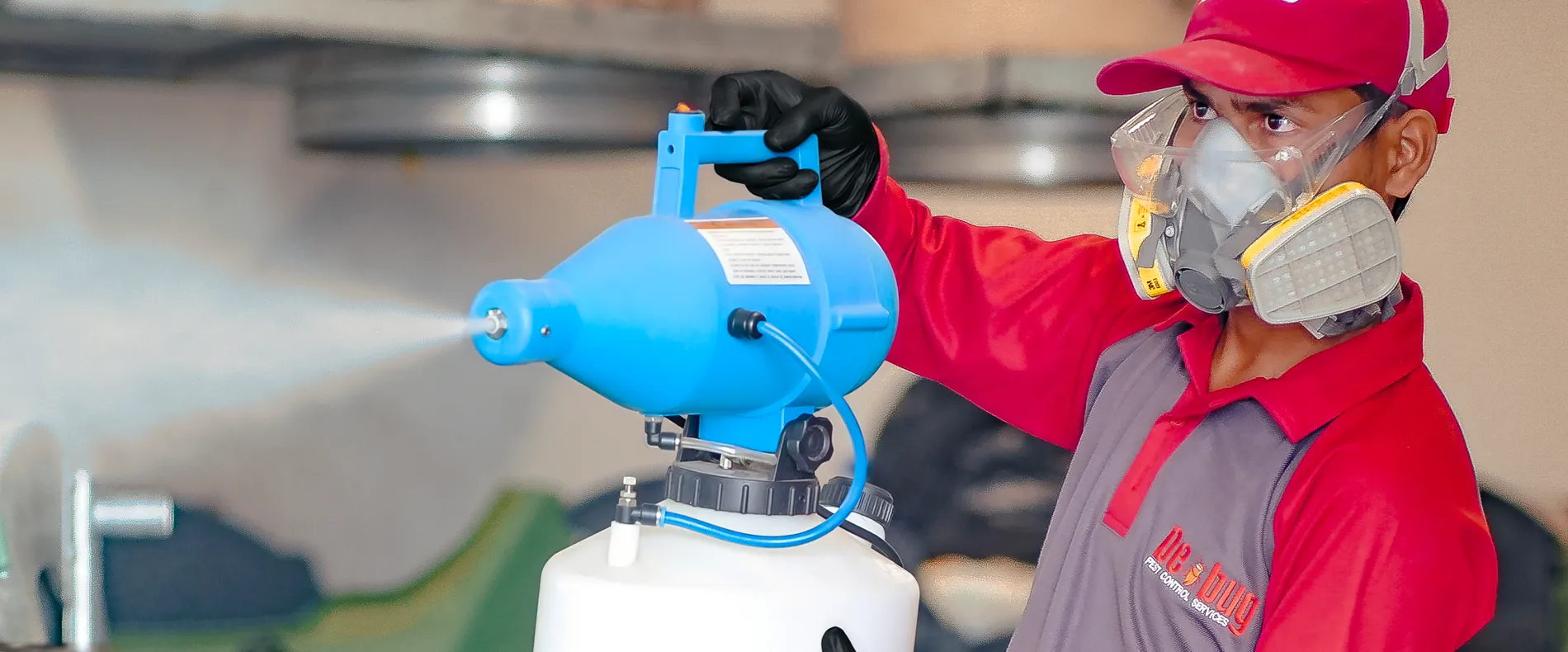
Every programme starts with a full facility audit, because you cannot protect what you have not mapped. We work through the entry points, harbourage sites, and activity hotspots, and we sit with how the site runs: shift patterns, loading schedules, the workflows that decide when treatment can actually happen without stopping production. From that, the IPM programme takes shape.
A perimeter bait station network catches rodents before they reach the building. Internal monitoring devices show activity early. Targeted gel baiting handles cockroaches in production areas without broadcast spraying near the product. And structural exclusion seals the routes pests use in the first place, at loading bays, service penetrations, and drainage. Every site is different, so no two programmes are identical. For full details on our industrial pest control methodology, see our complete industrial pest control process.
ADAFSA Requirements for Industrial Pest Control in Abu Dhabi
Industrial pest control in Abu Dhabi is regulated by the Abu Dhabi Agriculture and Food Safety Authority (ADAFSA). The requirements are not optional and they are not light touch. Getting them wrong puts a trade licence and, for food and pharma sites, the right to operate at risk. Here is what they involve.
ADAFSA-Licensed Operators Only
Only companies with a valid ADAFSA pest control licence may carry out pest management at industrial facilities in Abu Dhabi, and every technician on site must hold their own ADAFSA certification card, not just the company. If an unlicensed operator works at your facility, the compliance gap is yours, not theirs. Debug holds full ADAFSA licensing for its Abu Dhabi industrial operations, with certified technicians on every visit.
Food Safety & HACCP Compliance
Food processing facilities, cold stores, and ingredient warehouses have to keep a documented pest management programme as part of their ADAFSA and HACCP certification. The documentation is not paperwork for its own sake. When an auditor arrives, the records are proof that the programme exists and is working, and pest activity in a food-handling area is a violation that can close the site. Debug provides fully audit-ready documentation after every visit, so the file is current whenever it is checked.
Industrial Trade Licence Requirements
An active pest control contract is a condition of trade licence renewal for industrial facilities in Abu Dhabi, and KIZAD and ICAD zone authorities can ask for evidence of an ongoing programme during their own audits. A lapsed contract is not just a pest risk, it is a renewal problem. Debug's annual maintenance contracts keep that requirement satisfied year-round, with documentation that holds up to both municipal and zone-authority review.
Pharmaceutical & Chemical GMP
Pharmaceutical and chemical plants operate under Good Manufacturing Practice (GMP), and GMP carries pest control requirements as strict as anything in the food sector. Broadcast chemical treatment is usually the wrong tool here, because the treatment itself can become a contamination concern. Debug runs specialized programmes built on non-chemical and low-toxicity methods suited to sensitive manufacturing environments, with documentation written to satisfy a GMP audit.



What to Expect When You Book
Here is how the process runs, from the first call through to long-term protection.
Comprehensive Facility Audit
Book online or call, and we arrange a full facility audit from our Mussafah branch. An industrial pest specialist walks the whole site: entry points, harbourage sites, production areas, storage zones, and the external perimeter. We also go through your operational workflows, shift patterns, and any compliance documentation you already hold, because the programme has to fit around how you run. Most facilities across the Abu Dhabi industrial zones get an audit booked within 24 to 48 hours.
Customised IPM Programme Design
The audit findings drive the design. We specify where the perimeter bait stations sit, where the internal monitoring devices go, which zones need targeted treatment, and what structural exclusion the building needs. For food processing and pharmaceutical sites, the whole programme is mapped to HACCP principles and GMP requirements from the start rather than retrofitted later. You get the proposal with facility maps, product specifications, and the service schedule, so you can see exactly what is going on and where before anything is installed.
Transparent Quote
The quote is itemized: equipment, materials, installation, and scheduled service visits, with no hidden fees. We also walk you through the monitoring method, how often we will attend, and what the reporting looks like, so you can hold the programme up against your own compliance obligations and judge it properly before you commit.
Implementation & Ongoing Monitoring
Installation is coordinated around your production schedule and shift patterns so the line keeps moving. Once the monitoring and treatment systems are in, scheduled visits keep the protection continuous, and a digital report is generated after each one so you always have a current record. For year-round cover, ask about our annual maintenance contracts. They fold in all scheduled visits, emergency callouts, and full audit documentation under one plan.
Frequently Asked Questions
Everything you need to know about industrial pest control in Abu Dhabi.
Industrial pest control operates at a fundamentally different scale and complexity. Where a standard commercial service might involve monthly spray treatments, industrial programmes require systematic bait station networks across large perimeters, electronic monitoring in critical zones, HACCP-aligned documentation, coordination around 24-hour shift patterns, and treatment methods compatible with food-grade or pharmaceutical-grade environments. Debug designs every industrial programme from the facility audit upward — there is no standard template.
Yes. Debug regularly services manufacturing plants, warehouses, and processing facilities across KIZAD (Khalifa Industrial Zone Abu Dhabi), ICAD (Industrial City of Abu Dhabi), and the wider Mussafah Industrial Area. Our Mussafah branch is positioned for rapid response to all Abu Dhabi industrial zones, and our technicians hold the required ADAFSA credentials for industrial facility access.
Yes. Our annual maintenance contracts (AMC) provide the most cost-effective industrial pest management. AMCs include all scheduled service visits, perimeter bait station maintenance, internal monitoring, emergency callout coverage, and full audit-ready documentation. Contract frequency is tailored to your facility risk profile — from weekly visits for food processing plants to monthly programmes for general warehousing.
What Abu Dhabi Facility Managers Say
Real results from real industrial clients across Abu Dhabi — sourced from verified Google Reviews.
Book Industrial Pest Control in Abu Dhabi Today
Protect your production lines, warehouses, and processing facilities from pest contamination. Debug delivers professional industrial pest management across all Abu Dhabi industrial zones — KIZAD, ICAD, and Mussafah Industrial. Audit-ready documentation by licensed professionals.
Licensed by ADAFSA. Rated 4.8★ on Google.