

Mold Treatment & Sealing in Abu Dhabi
Abu Dhabi's coastal humidity, year-round air conditioning use, and newer building stock with sealed envelopes create persistent condensation conditions that drive mould growth in residential and commercial properties across the emirate. From villa bathrooms in Khalifa City and Al Reef to apartment HVAC ducting on Al Reem Island and Saadiyat Island, mould colonies establish behind walls, inside ceiling voids, and around AC vents — posing health risks and causing structural damage if left untreated. Debug operates from our Mussafah facility with ADAFSA-licensed technicians providing specialist mould treatment services across Abu Dhabi. Call +971 2 307 4605 or book your free mould inspection online.
Why Mould Growth Is Common in Abu Dhabi Properties
Abu Dhabi's coastal location drives year-round humidity levels that regularly exceed 80% during summer months. Combined with heavy air conditioning use and modern sealed building envelopes, these conditions create persistent condensation that fuels mould colonisation across residential and commercial properties. Properties affected by mould often also benefit from professional disinfection services — our technicians assess for all related environmental health concerns during every visit.
Coastal Humidity & Condensation
Abu Dhabi sits on a low-lying coastal peninsula where ambient humidity regularly reaches 85–95% during summer months. When warm, moisture-laden outdoor air meets cold, air-conditioned interior surfaces, condensation forms on walls, window frames, and around AC diffusers. This persistent surface moisture creates ideal conditions for mould spore germination — particularly in bedrooms and living areas where AC runs continuously. Properties on Al Reem Island, Saadiyat Island, and the Corniche face the highest condensation risk due to direct coastal exposure.
- Summer humidity exceeds 85% on Abu Dhabi's coastal developments
- Condensation forms where cold AC surfaces meet warm humid air
- Al Reem Island and Saadiyat Island properties face highest coastal exposure
- Window frames and AC diffuser surrounds are primary condensation zones
- Overnight humidity spikes drive condensation on exterior-facing walls
- Continuous AC operation without ventilation traps moisture inside sealed spaces
Newer Buildings with AC Condensation Issues
Abu Dhabi's newer residential developments in Khalifa City, Al Raha, Yas Island, and MBZ City feature tightly sealed building envelopes designed for energy efficiency. While effective at reducing cooling costs, these sealed environments restrict natural air exchange and trap indoor moisture generated by cooking, bathing, and laundry. When combined with AC condensate drain issues or poorly insulated ductwork, the resulting moisture accumulation produces ideal mould growth conditions inside wall cavities, behind kitchen units, and within bathroom ceiling voids.
- Sealed building envelopes restrict natural ventilation and trap indoor moisture
- Khalifa City and Al Raha developments report frequent AC-related mould issues
- Condensate drain leaks from split AC units cause hidden mould behind walls
- Poorly insulated ductwork produces condensation inside ceiling voids
- Kitchen and bathroom extraction fans often discharge into ceiling spaces
- Energy-efficient glazing reduces air exchange and increases humidity build-up
HVAC Ductwork & AC Vents
Air conditioning ductwork throughout Abu Dhabi properties provides a concealed environment where temperature differentials and moisture combine to sustain mould colonies. Dust accumulation inside ducts provides organic nutrients, while condensation on duct surfaces supplies the moisture mould requires. Contaminated ductwork distributes mould spores throughout the property via the air supply, affecting indoor air quality and triggering respiratory symptoms in occupants — a particular concern in bedrooms and offices where people spend extended periods.
- AC ductwork harbours mould colonies fed by dust and condensation
- Contaminated ducts distribute mould spores throughout the entire property
- Supply and return vents show visible black mould when duct contamination is severe
- Poor duct insulation creates condensation hotspots inside ceiling voids
- Indoor air quality testing often reveals elevated spore counts from duct mould
- Annual duct inspection and cleaning recommended for all Abu Dhabi properties
Water Ingress & Plumbing Leaks
Undetected water ingress from plumbing leaks, bathroom waterproofing failures, and facade sealant deterioration creates concealed damp zones that sustain chronic mould growth. In Abu Dhabi's villa communities across Al Reef, Al Ghadeer, and Al Shamkha, bathroom waterproofing failures allow moisture to migrate through floor slabs into adjacent rooms. Slow plumbing leaks behind walls feed mould colonies that remain hidden until musty odours or visible staining emerge — by which time the infestation is often extensive.
- Bathroom waterproofing failures drive mould through floor slabs into adjacent rooms
- Concealed plumbing leaks sustain mould growth behind walls for months
- Villa communities in Al Reef and Al Ghadeer report frequent waterproofing-related mould
- Facade sealant deterioration allows rain and humidity ingress into wall cavities
- Musty odours are often the first sign of concealed water-driven mould colonies
- Thermal imaging inspection identifies hidden moisture sources driving mould growth
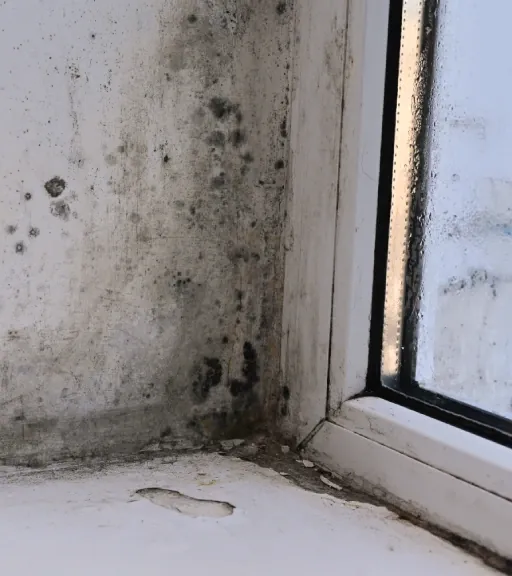
Mould Treatment Designed for Abu Dhabi Conditions
Every mould treatment we carry out in Abu Dhabi begins with a thorough inspection to identify the full extent of contamination and the underlying moisture source driving growth. For residential properties across Khalifa City, Al Reem Island, and Saadiyat Island, we use moisture meters, thermal imaging, and air quality sampling to map both visible mould colonies and concealed growth behind walls, inside ceiling voids, and within HVAC ductwork. Understanding the moisture source — whether it is AC condensation, plumbing leaks, or coastal humidity ingress — is essential for effective long-term remediation.
Our treatment protocol combines physical mould removal with professional-grade antimicrobial application. Contaminated surfaces are treated using HEPA-filtered negative air containment to prevent spore dispersal during remediation. Following removal, we apply long-lasting antimicrobial protective coatings to treated surfaces and address the underlying moisture pathways through ventilation improvements, condensate drainage correction, and targeted dehumidification recommendations.
All procedures comply with ADAFSA regulations and our technicians hold individual ADAFSA pest control certification cards. We follow integrated pest management (IPM) protocols aligned with our ISO 9001/14001/45001 certifications. For full details on our mould remediation methodology, see our complete mould treatment process.
ADAFSA Requirements for Mould Treatment in Abu Dhabi
Mould treatment in Abu Dhabi is regulated by the Abu Dhabi Agriculture and Food Safety Authority (ADAFSA). Understanding these requirements protects your property and ensures legal compliance.
ADAFSA-Licensed Companies Only
Only companies holding a valid ADAFSA pest control licence may carry out mould treatment involving antimicrobial chemical application in Abu Dhabi. All technicians must hold individual ADAFSA certification cards. Debug maintains full ADAFSA licensing for our Abu Dhabi operations.
ADAFSA-Approved Products
All antimicrobial and fungicidal products used for mould remediation in Abu Dhabi must comply with ADAFSA regulations. Debug uses only authority-approved, low-toxicity antimicrobial formulations that are safe for occupied residential and commercial spaces.
Community & Facility Management Compliance
Island developments, villa compounds, and commercial facilities in Abu Dhabi must maintain documented environmental health management programmes to satisfy community management and ADAFSA requirements. Debug provides fully audit-ready service reports with every mould treatment visit.
Commercial Trade Licence Renewal
Commercial properties in Abu Dhabi must maintain an active pest control contract to satisfy trade licence renewal conditions. Debug provides annual maintenance contracts (AMC) that meet this requirement with scheduled inspections covering mould, indoor air quality, and all common pest concerns.





What to Expect When You Book
From first call to follow-up, here is how the mould treatment process works for Abu Dhabi properties.
Initial Consultation
Call or book online and we schedule a mould inspection at your Abu Dhabi property. Our technician arrives with moisture meters, thermal imaging equipment, and air sampling tools. Properties across Khalifa City, Al Reem Island, and MBZ City are typically inspected within 24–48 hours of booking.
Comprehensive Mould Assessment
Your technician maps all visible mould colonies and uses thermal imaging to identify concealed moisture sources and hidden growth behind walls, inside ceiling voids, and within HVAC systems. Air quality sampling determines spore types and concentration levels. This assessment takes approximately 60–90 minutes for a standard villa or apartment.
Transparent Quote & Treatment Plan
After assessment, you receive a detailed quote covering mould remediation, antimicrobial treatment, protective coatings, and moisture source correction recommendations — no hidden fees. We explain the mould species identified, the extent of contamination, and exactly what our treatment programme involves.
Remediation, Treatment & Prevention
Our technicians carry out mould removal using HEPA-filtered containment, apply professional-grade antimicrobial treatment to all affected surfaces, and apply protective coatings to inhibit regrowth. We provide detailed moisture management recommendations to address the root cause. Our 6-month warranty covers any recurrence at treated surfaces. For ongoing protection, ask about our annual maintenance contracts in Abu Dhabi.
Frequently Asked Questions
Everything you need to know about mould treatment in Abu Dhabi.
Yes. Our annual maintenance contracts (AMC) include scheduled inspections that monitor moisture levels, check previously treated areas for any recurrence, and inspect HVAC systems for condensation issues. AMCs are particularly valuable for properties on Abu Dhabi's islands and coastal developments where humidity exposure is highest year-round.
What Abu Dhabi Property Owners Say
Real results from real customers across Abu Dhabi — sourced from verified Google Reviews.
Book Mould Treatment in Abu Dhabi Today
Don't let mould compromise your health or property. Debug delivers professional mould remediation across all Abu Dhabi communities — from Al Reem Island to Khalifa City. Licensed technicians, antimicrobial treatment, and a 6-month warranty.
Licensed by ADAFSA. Rated 4.8★ on Google.