

Professional Beehive Removal & Control Services in Abu Dhabi
The presence of mangrove areas, irrigated landscaping and residential garden structures favors honeybee swarms’ occurrence and hive establishment in villas, commercial buildings and waterfront developments in Abu Dhabi. Beetle colonies are common throughout Khalifa City and Al Reef and from the Saadiyat Island to Al Reem Island. They often take up residence in wall cavities, roof voids, pergolas, utility boxes and garden sheds. Debug offers professional beehive removal services in Abu Dhabi that include humane live bee relocation, complete hive extraction, cavity cleaning and long-term beehive control for residential and commercial properties. Our ADAFSA licensed technicians are fast in safely removing active hives to decrease the risk of recolonization. Call +971 2 307 4605 or book your free inspection online.
Why Beehive Activity Is Common in Abu Dhabi
Abu Dhabi's extensive mangrove habitats, irrigated landscaping, and warm year-round temperatures sustain large honeybee populations that regularly establish colonies on residential and commercial properties. Properties dealing with bee problems may also encounter bird nesting issues — our technicians assess for all wildlife concerns during every visit to ensure comprehensive protection.
Mangrove Bee Populations
Abu Dhabi's coastal mangrove forests — particularly along the eastern mangrove area, Jubail Island, and Saadiyat's northern shoreline — sustain thriving wild honeybee populations. These mangrove colonies produce frequent swarms that travel inland seeking new nest sites, often settling on nearby residential properties, commercial buildings, and waterfront developments within a few kilometres of the mangrove belt.
- Eastern mangrove reserves sustain large wild honeybee populations
- Swarm season peaks between February and May as colonies outgrow mangrove sites
- Jubail Island and Saadiyat properties receive the highest swarm pressure
- Swarms travel up to 5 km inland from mangrove habitats seeking new nest sites
- Waterfront developments attract bees to irrigated landscaping and flowering plants
- Annual pre-swarm inspection recommended for properties near mangrove zones
Island Landscaping & Irrigated Gardens
Al Reem Island, Saadiyat Island, and Yas Island feature extensive irrigated landscaping, flowering ornamental plants, and water features that provide abundant foraging resources for honeybees. Once a swarm identifies a reliable food and water source, it seeks the nearest sheltered cavity to establish a permanent hive — commonly choosing building cavities, utility boxes, and landscape structures on the same development.
- Irrigated flowering landscaping provides year-round foraging for honeybees
- Al Reem Island and Yas Island developments report frequent hive establishment
- Water features and swimming pool areas attract foraging scout bees
- Landscape planters and retaining walls offer concealed nesting cavities
- Utility and irrigation control boxes provide enclosed hive-building sites
- Regular landscape inspection recommended during peak swarming season
Villa Gardens & Outdoor Structures
Bee activity is often observed around pergolas, garden sheds, play equipment, covered parking areas and outside storage structures in villa communities across Khalifa City, Al Reef, Al Ghadeer and Al Raha. These shaded, enclosed spaces are ideal nesting sites for honeybee colonies during swarm season. Our bee hive control service includes identification of the hive, safe removal, relocation of the live colony if possible, removal of the comb and sealing of entry points to help prevent future hive formation around residential structures.
- Garden sheds and storage structures harbour concealed bee colonies
- Khalifa City and Al Reef villas report highest residential hive activity
- Pergola roof cavities provide warm, sheltered hive-building environments
- Children's play equipment with hollow structural tubes attracts nesting bees
- Covered car ports and gate canopies are common swarm-settling locations
- Monthly garden structure inspection recommended during swarming season
Wall Cavities, Roof Voids & Structural Hive Removal
Honeybees like to build colonies in wall voids, ceiling cavities, AC pipe penetrations, roof spaces and unsealed facade gaps. If a colony chooses to occupy a structure, honeycomb and wax can attract pests, stain surfaces and result in continued bee activity if not properly removed. Debug offers professional service solutions for hidden beehives removal. This includes comb removal, pheromone neutralising treatment, cavity cleaning and exclusion sealing to reduce re-infestations.
- Wall cavities accessed through weep holes are the most common hive location
- AC pipe penetrations and cable entry points serve as bee access routes
- Roof voids and false ceiling spaces harbour large concealed colonies
- Honey and comb build-up inside walls can cause damp damage and attract pests
- Commercial buildings in Mussafah and Zayed City report structural hive problems
- Professional extraction and cavity sealing required to prevent colony return
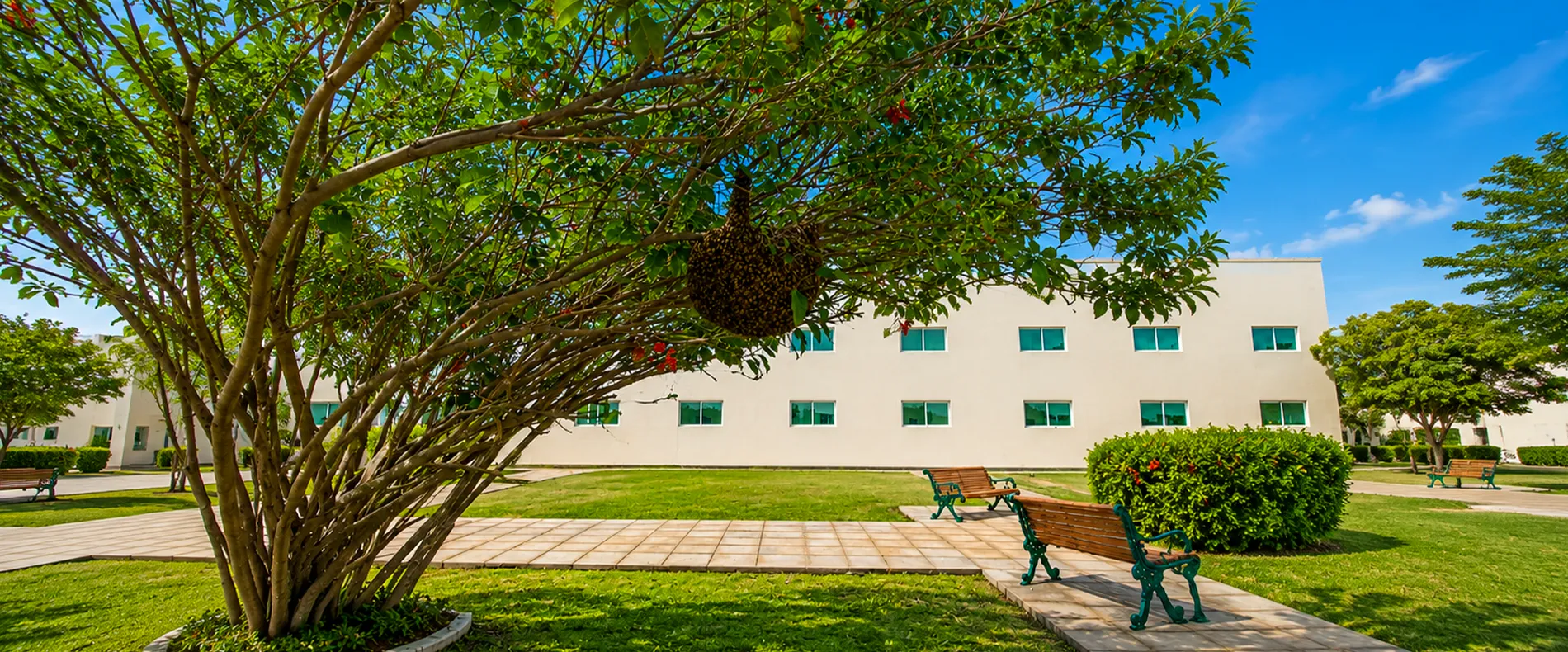
Conditions for Beehive Removal in Abu Dhabi
Our Abu Dhabi beehive control service is to remove hives in a safe, humane and compliant manner taking local environmental conditions into account. Our technicians try to re-home live bees wherever possible to villa gardens, pergolas, boundary walls and outdoor structures where hives are accessible.
Where nests are concealed in walls, roof voids or utility enclosures we conduct controlled removal procedures including comb removal, cavity treatment, pheromone neutralization and exclusion sealing to prevent future swarming. All our beehive removal jobs are carried out by ADAFSA licensed technicians, following approved pest management protocols, in accordance with our ISO certified procedures.
For full details on our beehive removal methodology, see our complete beehive removal process.
ADAFSA Requirements for Beehive Removal in Abu Dhabi
Beehive removal in Abu Dhabi is regulated by the Abu Dhabi Agriculture and Food Safety Authority (ADAFSA). Understanding these requirements protects your property and ensures legal compliance.
ADAFSA-Licensed Companies Only
Only companies holding a valid ADAFSA pest control licence may carry out beehive removal in Abu Dhabi. All technicians must hold individual ADAFSA certification cards. Debug maintains full ADAFSA licensing for our Abu Dhabi operations.
ADAFSA-Approved Methods & Products
All beehive removal methods and any chemical products used in Abu Dhabi must comply with ADAFSA regulations. Debug prioritises live bee relocation and uses only authority-approved products when chemical treatment is necessary for inaccessible or structurally integrated hives.
Community & Facility Management Compliance
Island developments, villa compounds, and commercial facilities in Abu Dhabi must maintain documented pest and wildlife management programmes to satisfy community management and ADAFSA requirements. Debug provides fully audit-ready service reports with every visit.
Commercial Trade Licence Renewal
Commercial properties in Abu Dhabi must maintain an active pest control contract to satisfy trade licence renewal conditions. Debug provides annual maintenance contracts (AMC) that meet this requirement with scheduled quarterly inspections covering bees and all other common pests.




What to Expect From Our Beehive Removal Service
Bees are removed by first doing a detailed inspection to learn the size of the colony, where the hive is located, how active the bees are, access points to the hive and any safety issues. Following the inspection, our technicians will determine the safest and most effective solution, whether it be live bee relocation or controlled hive removal. For properties with recurring bee activity, we also provide annual maintenance contracts with scheduled inspections and preventive sealing works.
Same-Day Response
Call or book online and we dispatch a licensed technician from our Mussafah branch. Beehive removal is treated as a priority due to the sting risk. Properties across the Abu Dhabi mainland — including Khalifa City, MBZ City, and the Corniche — typically see a technician within 2 hours during business hours.
Hive Assessment & Safety Plan
Your technician locates the hive, identifies the bee species, and assesses colony size, position, and accessibility. A safety plan is established before any work begins — ensuring family members, pets, and bystanders are at a safe distance. This assessment takes approximately 20–30 minutes for most properties.
Transparent Quote
After assessment, you receive an itemised quote covering hive extraction, live relocation (where feasible), comb removal, cavity cleaning, and exclusion sealing — no hidden fees. Pricing depends on hive location (accessible garden structure versus concealed wall cavity), colony size, and whether specialist access equipment is required.
Extraction, Relocation & Prevention
Our technician extracts the colony using professional bee-handling techniques, removes all comb and honey residue, applies pheromone-neutralising treatment to the cavity, and seals entry points to prevent recolonisation. Live colonies are transported to an approved apiary site. Our service guarantee covers any recurrence at the same location. For ongoing protection, ask about our annual maintenance contracts in Abu Dhabi.
Frequently Asked Questions
Everything you need to know about beehive removal in Abu Dhabi.
Yes. Debug prioritises live bee relocation whenever the hive location and colony condition allow safe transfer. Our technicians carefully extract the queen, workers, and brood comb into a secure transport hive and relocate the colony to an approved apiary site. Live relocation is our preferred method for accessible hives on garden structures, boundary walls, and open building features. For deeply embedded hives inside wall cavities or roof voids where live extraction is not feasible, we use approved low-toxicity treatments to ensure complete removal.
Honeybees leave pheromone markers on surfaces they have occupied. If a previous hive is removed but the comb residue, honey, and pheromone traces are not thoroughly cleaned, scout bees from nearby colonies will detect these chemical signals and attempt to establish a new colony in the same location. Debug's removal process includes complete comb and honey removal, pheromone-neutralising treatment, and physical sealing of the cavity to eliminate return signals.
Cost of Beehive Removal The cost of beehive removal varies by location of hive, ease of access, colony size and structural complexity. Hive removal for easy-to-reach hives typically costs from AED 400, however, additional extraction work may be needed for hives that are hidden inside walls or roof voids.
We strongly advise against DIY beehive removal. Honeybee colonies can contain tens of thousands of bees, and disturbing a hive without proper protective equipment and handling techniques can trigger a defensive stinging response that poses a serious health risk — particularly for individuals with bee venom allergies. Additionally, incomplete removal leaves comb and pheromone residue that attracts new swarms. Contact Debug for safe professional removal.
Yes. Our annual maintenance contracts (AMC) include scheduled inspections that identify new bee activity before colonies establish, plus preventive exclusion sealing of high-risk cavity entry points around your property. AMCs are particularly valuable for villa properties near mangrove zones and island developments with extensive landscaping.
Yes. Our technicians will always try to relocate live bees humanely where possible. Colony hives are transported to approved apiary sites away from population centers in secure transport hives.
Typical signs include increased bee activity around vents or openings in walls, buzzing sounds inside walls or ceilings, honey staining, and continued bee activity around the same opening. I’d recommend a professional inspection before the colony gets any bigger.
Yes. We provide Annual Maintenance Contracts which include scheduled inspections, preventive sealing of potential nesting points and early detection of new bee activity around residential and commercial properties.
Yes. Debug provides emergency beehive removal services in Abu Dhabi for active bee swarms, exposed hives and high-risk colonies near entrances, balconies, schools, gardens and commercial properties.
What Abu Dhabi Property Owners Say
Real results from real customers across Abu Dhabi — sourced from verified Google Reviews.
Book Beehive Removal in Abu Dhabi Today
Don't risk a sting. Debug delivers same-day beehive removal and live bee relocation across all Abu Dhabi communities — from Al Reem Island to Khalifa City. Safe extraction by licensed professionals.
Licensed by ADAFSA. Rated 4.8★ on Google.