

Stray Cat & Dog Control Services in Fujairah
Fujairah's stray problem is wider than cats and dogs, and that's what sets it apart. Agricultural waste, fish offal from the port, residential bins and the Hajar Mountain corridors all feed it, bringing in foxes and jackals alongside feral cats. Debug handles it all humanely and within the law, using trap-neuter-release to bring colony numbers down for good, from our Al Hail Village office.
Why Stray Animal Problems Are Common in Fujairah
Stray animals go where the food is, and Fujairah offers more sources of it, in more varied terrain, than the flat coastal emirates. The fishing port puts out fish waste daily. The farms hold animal feed and poultry. The residential areas leave bins accessible. And uniquely, the Hajar Mountains sit close enough that wildlife descends to join the scavenging. That combination sustains stray cats, stray dogs, and feral colonies year-round, and it is why stray cat control in Fujairah often has to be approached alongside dog and wildlife management rather than in isolation. Properties dealing with strays frequently have related wildlife concerns too, bird nuisance or beehive problems, so our technicians assess for all of them on every visit rather than treating each as a separate call.
Agricultural Areas & Farm Waste
A working farm is, from a stray animal's point of view, an ideal home: food, water, and shelter in one place. Fujairah's agricultural zones around Masafi, Qidfa, and Mirbah generate organic waste from crop production, stored animal feed, and poultry farming, all of which draws stray cats and dogs in. Once there, the farm buildings, equipment sheds, and irrigation infrastructure give them sheltered places to den, and the irrigation itself supplies the water that lets a population settle and grow rather than just pass through. Poultry waste in particular is a powerful attractant for both stray dogs and feral cats. Clearing the animals alone rarely lasts on a farm; the durable result comes from combining stray dog control in Fujairah with farm waste management and perimeter control, so the attractant and the access are dealt with together.
- Crop waste and stored animal feed attract stray cats and dogs to farm areas
- Masafi and Qidfa agricultural zones report the highest farm stray populations
- Poultry farm waste is a primary attractant for stray dogs and feral cats
- Farm buildings and equipment sheds provide sheltered denning sites
- Irrigation infrastructure creates water sources that sustain stray populations
- Farm waste management combined with perimeter control provides lasting results
Fishing Port Waste & Coastal Areas
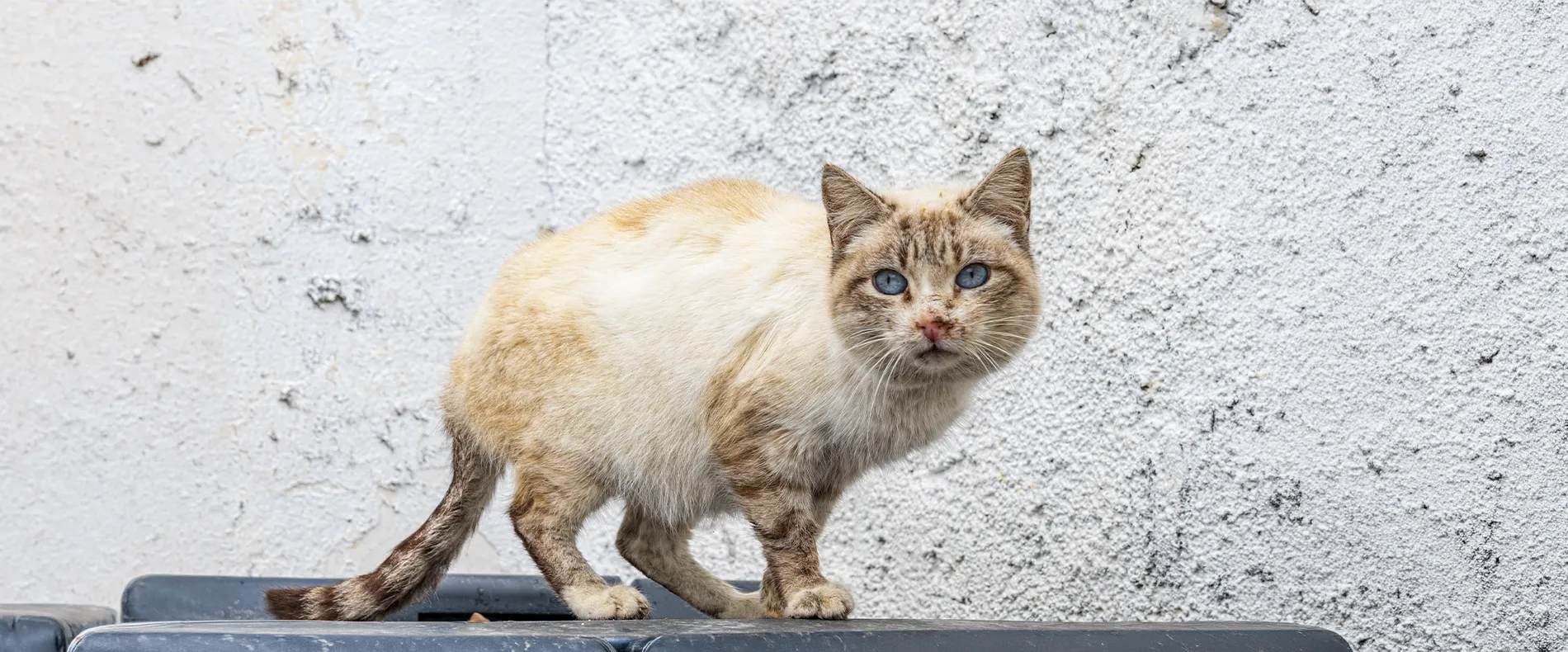
Where there is fish waste, there are cats, and Fujairah's fishing port at Al Faseel produces it in quantity. The fish offal, processing waste, and bait remnants from the port and the coastal fishing communities draw large concentrations of stray cats, and the Al Faseel port area now holds one of the highest feral cat densities on the entire East Coast. The problem does not stay at the waterside. The boat landing areas generate waste on a predictable schedule, established feral colonies form around it, and from there the cats spread into the adjacent residential and commercial neighborhoods. Because the feeding follows the fish market's waste-collection timing, the colonies are sustained on a reliable cycle, which is why lasting control at the port depends on three things together: improving waste management, removing animals where needed, and humane trap-neuter-release for the established feral cat colonies so the population steadily falls instead of replenishing itself.
- Fish offal and processing waste attract large stray cat concentrations at the port
- Al Faseel port area hosts the highest feral cat density in Fujairah
- Coastal fishing boat landing areas generate waste attracting strays
- Established port feral colonies spread into adjacent residential neighbourhoods
- Fish market waste collection timing creates predictable stray feeding patterns
- Port waste management improvement is essential for controlling feral populations
Residential Areas & Urban Centres
In the residential areas of Fujairah City, Al Faseel, and Al Hail, the food sources are everywhere a stray cares to look: accessible waste bins, the rear service areas behind restaurants, and the outdoor spaces where well-meaning residents leave food out. Fujairah's urban centres are relatively compact, which concentrates the problem rather than spreading it thin, because the animals can move easily between residential blocks, commercial premises, and waste areas without much distance to cover. Deliberate feeding is a real driver here; it keeps colonies fed and growing even when bins are secured. That is why the best residential results come from pairing animal removal with waste management improvements and a degree of community education, since the feeding has to ease off for the population to actually fall.
- Accessible waste bins in residential areas sustain growing stray populations
- Fujairah City and Al Faseel residential zones report persistent stray cat issues
- Restaurant rear service areas generate food waste attracting strays
- Compact urban layout allows strays to move easily between food sources
- Deliberate feeding by residents sustains and grows feral cat colonies
- Community education combined with waste management improvement provides best results
Mountain Wildlife — Foxes & Jackals
This is the part that genuinely sets Fujairah apart. Because the Hajar Mountains sit so close, properties here do not just deal with stray cats and dogs, they encounter Arabian red foxes and jackals descending from mountain habitat to scavenge. Unsecured bins, poultry farms, and livestock areas are what draw them down, and the properties around Sakamkam and Masafi report the most sightings. A fox or a jackal is not a stray dog, and treating it like one is both ineffective and, given that these are protected wildlife species, legally risky. Fox and jackal removal requires specialist capture equipment, proper handling, and real knowledge of the East Coast terrain they move through, which is exactly the kind of wildlife work standard stray animal control does not cover.
- Arabian red foxes descend from mountains to scavenge residential food waste
- Jackals are encountered near agricultural and livestock properties
- Sakamkam and Masafi properties report the highest fox and jackal sightings
- Unsecured bins and poultry farms are primary attractants for mountain wildlife
- Fox and jackal encounters require specialist capture equipment and handling
- Mountain wildlife management demands local knowledge of East Coast terrain
Stray Animal Control Designed for East Coast Conditions
Our humane stray animal control in Fujairah is built around what the East Coast actually presents, which is a wider species range than the western emirates ever deal with. In Abu Dhabi or Dubai, the job is urban stray cats and dogs. In Fujairah it is that plus the mountain wildlife, the foxes and jackals coming down from the Hajar Mountains into residential and agricultural areas. A program set up only for cats and dogs simply cannot handle the latter safely or legally. So our technicians are wildlife-trained and equipped for the full range of species encountered across the emirate, and we match the method to the animal rather than applying one approach to all of them, from humane cat control and trap-neuter-release for feral colonies to humane live capture for stray dogs to specialist handling for protected wildlife.
Fujairah Municipality Requirements for Stray Animal Control
Stray animal management in Fujairah is regulated by Fujairah Municipality, and with wildlife species involved there is a second layer of federal animal welfare and wildlife law on top. This is an area where getting it wrong has real consequences, so knowing the requirements protects both your property and you. Here is what they involve.
Licensed Pest Control Operators
Fujairah Municipality requires every pest and wildlife control company to hold a valid municipal licence, and the technicians to carry their own individual certification rather than relying on the company licence alone. Debug operates with full Fujairah Municipality approval, with certified technicians on every visit across the emirate.
Animal Welfare & Wildlife Protection
UAE Federal Law on Animal Welfare requires all stray animal management to be carried out humanely, without exception, and foxes and jackals carry additional protection under UAE wildlife regulations on top of that. This is precisely why the wildlife side of the work cannot be improvised: humane live capture and correct handling are legal obligations, not optional good practice. Debug follows every animal welfare and wildlife protection requirement throughout each operation, which is also what protects the client from liability.
Agricultural & Food Safety Standards
Agricultural properties and food-handling businesses in Fujairah have to manage stray animal activity to satisfy health and hygiene requirements, since strays around food and produce are both a contamination risk and an inspection failure waiting to happen. Debug provides documented stray animal management programmes with full audit-ready service reports for every visit, so the record is current whenever an inspector asks for it.
Commercial Property Requirements
Commercial premises in Fujairah are required to maintain hygienic environments as a condition of trade licence compliance, and persistent stray activity works against that directly. Debug's annual maintenance contracts fold scheduled stray animal monitoring and management into a comprehensive pest and wildlife program, so the same arrangement keeps the premises hygienic and the licensing requirement satisfied through the year.



What to Expect When You Book
Here is how the process runs, from the first call through to follow-up.
Local Response & Assessment
Book online or call, and we arrange a visit from our Fujairah office in Al Hail Village. The technician surveys the property to establish the type and number of animals involved, the feeding sources sustaining them, the access points, and the denning locations, because removing animals without removing the reasons they came rarely holds. Where the encounter involves mountain wildlife, foxes or jackals, we also assess the terrain and recommend the appropriate specialist capture methods, which differ entirely from those used for cats and dogs.
Humane Trapping Program
Using the assessment findings, we deploy humane live-capture traps at the points where the animals are actually active, baited and positioned near the identified zones, and monitored regularly so nothing is left distressed in a trap. For the larger wildlife, foxes and jackals, we use appropriately sized specialist traps, and these often take several nights of patient trapping rather than a single visit, since wary mountain animals will not approach an unfamiliar trap immediately.
Authority Coordination & Handover
Captured animals are handled humanely throughout and transported in secure, ventilated containers, not improvised ones. We coordinate with Fujairah Municipality animal control for proper handover, and wildlife species are dealt with strictly in line with UAE wildlife protection regulations, which is the part that most distinguishes a compliant operation from an informal one. You receive a detailed service report documenting every animal captured and the actions taken, both for your records and for any compliance need.
Exclusion & Prevention Measures
Removal is only half the job, because if the food source and the access remain, new animals simply take the place of the ones removed. So after capture we provide recommendations and can carry out the exclusion work that actually keeps strays from returning, perimeter proofing, waste management improvements, and livestock protection advice tailored to the property. For sites under ongoing stray animal pressure, particularly farms and port-adjacent premises, our annual maintenance contracts include scheduled monitoring and trapping through the year so the problem does not quietly rebuild.
Frequently Asked Questions
Everything you need to know about stray animal control in Fujairah.
The full range the East Coast presents. That means stray and feral cats, which are the most common, especially around the fishing port, stray and feral dogs around farms and residential areas, and the mountain wildlife unique to Fujairah, Arabian red foxes and jackals descending from the Hajar Mountains. Each is handled with methods and equipment suited to that species, which is why a wildlife-trained team matters here more than in the western emirates.
Yes, entirely, and it is a legal requirement as much as a principle. UAE Federal Law on Animal Welfare obliges all stray animal management to be carried out humanely, and we use live-capture trapping, careful handling, and secure ventilated transport throughout, with traps monitored so no animal is left distressed. Wildlife species are additionally handled under UAE wildlife protection regulations.
It depends on the type and number of animals, the size of the property, and whether the situation involves mountain wildlife requiring specialist capture, which takes longer. We provide a free inspection and a transparent, itemized quote with no hidden fees, so you see the full scope before committing.
Yes. Our office is in Al Hail Village, which keeps our local licensing current and lets us respond across the emirate, and out to the agricultural and mountain-edge properties, faster than providers travelling in from Dubai or Sharjah.
Yes. Humane cat control is a major part of our Fujairah work, especially around the Al Faseel fishing port and residential areas where feral cat colonies build up on accessible food waste. We use trap-neuter-release (TNR), which humanely traps and neuters the cats before returning them, so the colony shrinks gradually over time instead of being cleared and refilled. On a site like the port, TNR works best alongside improved waste management, since reducing the food source is what stops new cats arriving.
What Fujairah Clients Say
Real results from real customers — sourced from verified Google Reviews.
Book Stray Animal Control in Fujairah Today
Debug brings the same professional standard to Fujairah that we deliver across the UAE. Local office, trained wildlife handlers, and stray animal management adapted to the East Coast's unique conditions — including mountain wildlife.
Fujairah Municipality compliant. BPCA & NPMA accredited. ISO certified.